
Safety First
Wear eye protection and a dust mask when scraping or sanding peeling paint. If your home was built before 1978, test the existing paint for lead before disturbing it. If the test is positive, stop and follow EPA lead-safe work practices or hire a lead-safe certified professional. Fix any moisture or leak causing the peeling before repainting.
Time
2-4 Hours
Difficulty
Easy
Cost
$20-$60
🧰 Tools & Materials
Tools
- Paint scraper or putty knife
- Sanding sponge or 120–220 grit sandpaper
- Paintbrush or roller
- Vacuum or shop vac
- Clean rags
Materials
- Matching paint
- Primer
- Lightweight spackle or patching compound, if needed
- Painter’s tape
- Drop cloth
🔎 Signs Paint Needs Repair
- Paint is peeling or flaking away from the surface
- Edges of the paint are curling or lifting
- Bare drywall, plaster, or wood is showing underneath
- Paint continues peeling after previous touch-ups
- Bubbling or cracking appears before the paint begins peeling
📝 Before You Buy
Try to determine why the paint peeled before repairing it. Common causes include moisture, poor surface preparation, painting over a dirty or glossy surface, or applying incompatible coatings.
Use a primer appropriate for the surface underneath the peeling paint. If moisture caused the problem, fix the source before repainting or the peeling is likely to return.
🛠️ Before You Start
Protect the floor and nearby surfaces with a drop cloth. Check the surrounding paint to determine how far the loose area extends, then properly prep the walls for painting before applying any new coating.
Don’t simply paint over peeling sections. The loose material needs to be removed and the edges smoothed first.
Step 1: Scrape Away Loose Paint
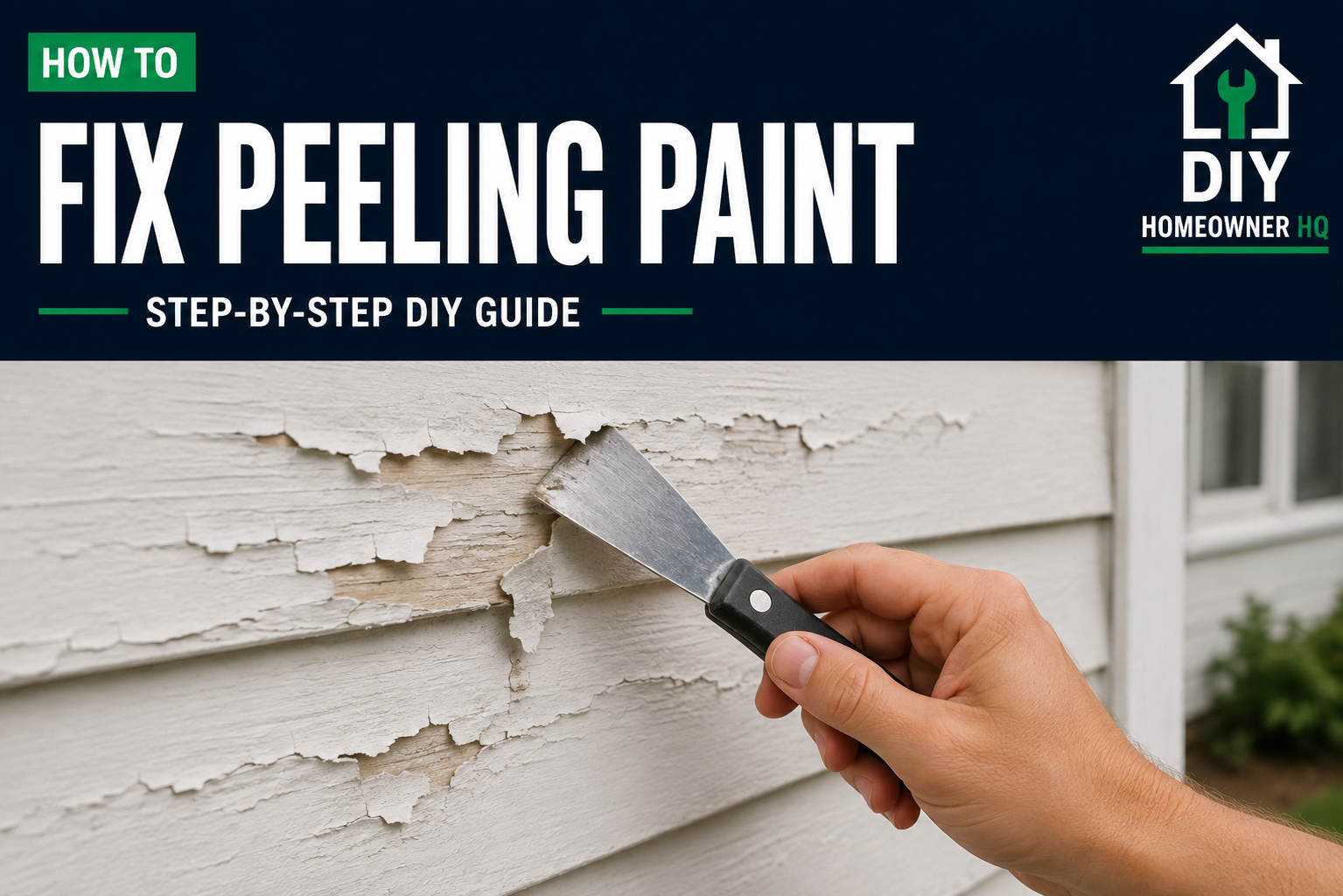
Use a paint scraper or putty knife to gently remove any paint that is already peeling, flaking, or lifting.
Continue until you reach paint that is firmly bonded to the surface.
What You Should See: The loose paint should be gone, leaving solid paint around the edges of the repair.
If Yours Looks Different: If large sections continue releasing easily, the adhesion problem may extend beyond the visibly damaged area.
Step 2: Sand the Edges Smooth
Sand around the repair to feather the remaining paint into the exposed surface. You shouldn’t be able to feel a sharp ridge between the old paint and the bare area.
Remove all sanding dust when finished.
💡 Pro Tip: Run your fingertips across the repair. If you can clearly feel the edge of the old paint, it may still show after repainting.
Step 3: Repair Any Surface Damage
If the peeling has exposed dents, gouges, torn drywall paper, or other damage, patch the drywall before painting and allow the repair to dry completely.
Sand the repair smooth and remove the dust.
What You Should See: The area should feel flat and blend smoothly into the surrounding surface.
Step 4: Prime the Repair
Apply primer over exposed drywall, plaster, wood, patches, or other bare surfaces.
Feather the primer slightly onto the surrounding painted area and allow it to dry completely.
If Yours Looks Different: If stains or discoloration continue showing through the primer, you may need a stain-blocking primer before applying paint.
Step 5: Repaint the Area
Once the surface is smooth, clean, and primed where necessary, paint over the previously painted surface using a thin coat of matching paint. Feather the edges into the surrounding area instead of stopping directly at the repair.a
Allow the paint to dry and apply a second coat if necessary.
💡 Pro Tip: Several thin coats will usually blend better and hold up longer than one heavy coat.
⚠️ Common Mistakes to Avoid
- Painting directly over peeling paint
- Ignoring moisture or leaks behind the damage
- Scraping only the most obvious loose pieces
- Skipping primer over exposed surfaces
- Leaving a raised edge around the repair
- Applying paint too heavily
- Repainting before patches or primer are completely dry
❓ Frequently Asked Questions
Can I just paint over peeling paint?
No. Loose paint will continue separating underneath the new coating. Remove anything that isn’t firmly bonded before repainting.
Why is my paint peeling?
Common causes include moisture, poor surface preparation, dirty or glossy surfaces, incompatible paint, and painting before the previous coating was properly dry.
Do I need primer after scraping peeling paint?
Prime exposed drywall, plaster, wood, repairs, and other bare surfaces before repainting.
How do I stop peeling paint from coming back?
Correct the underlying cause, remove all loose material, properly prepare the surface, and use compatible primer and paint.
Can moisture cause paint to peel?
Yes. Plumbing leaks, exterior water intrusion, and persistent humidity can all cause paint to lose adhesion.
☎️ When to Call a Professional
Consider professional help if peeling covers a large area, keeps returning after repairs, is associated with significant water damage or mold, or involves suspected lead-based paint that will need to be disturbed.