
Safety First
Wear safety glasses when sanding wood filler, and work in a ventilated area. Use light pressure when sanding to avoid damaging the surrounding trim.
Time
20-45 Minutes
Difficulty
Easy
Cost
$5-$15
🔧 Tools
- Putty knife
- Fine-grit sandpaper
- Clean cloth
- Nail set
- Hammer
📦 Materials
- Wood filler or lightweight spackle
- Primer, if needed
- Matching paint
🔎 When to Fill Nail Holes
Fill nail holes when replacing baseboards or installing other new trim, or before repainting existing baseboards, casing, or molding. Small finish-nail holes are usually quick and easy to hide.
🛒 Before You Buy
For painted trim, lightweight spackle or paintable wood filler works well. For stained natural wood, choose a stainable filler that closely matches the wood. If you’re dealing with an actual crack or split instead of a small nail hole, follow our How to Repair Cracked or Split Wood Trim guide instead.
🧰 Before You Start
Make sure each nail is slightly below the surface. If a nail head sticks out, use a nail set and hammer to carefully drive it just below the surface before applying filler.
Step 1: Apply the Filler
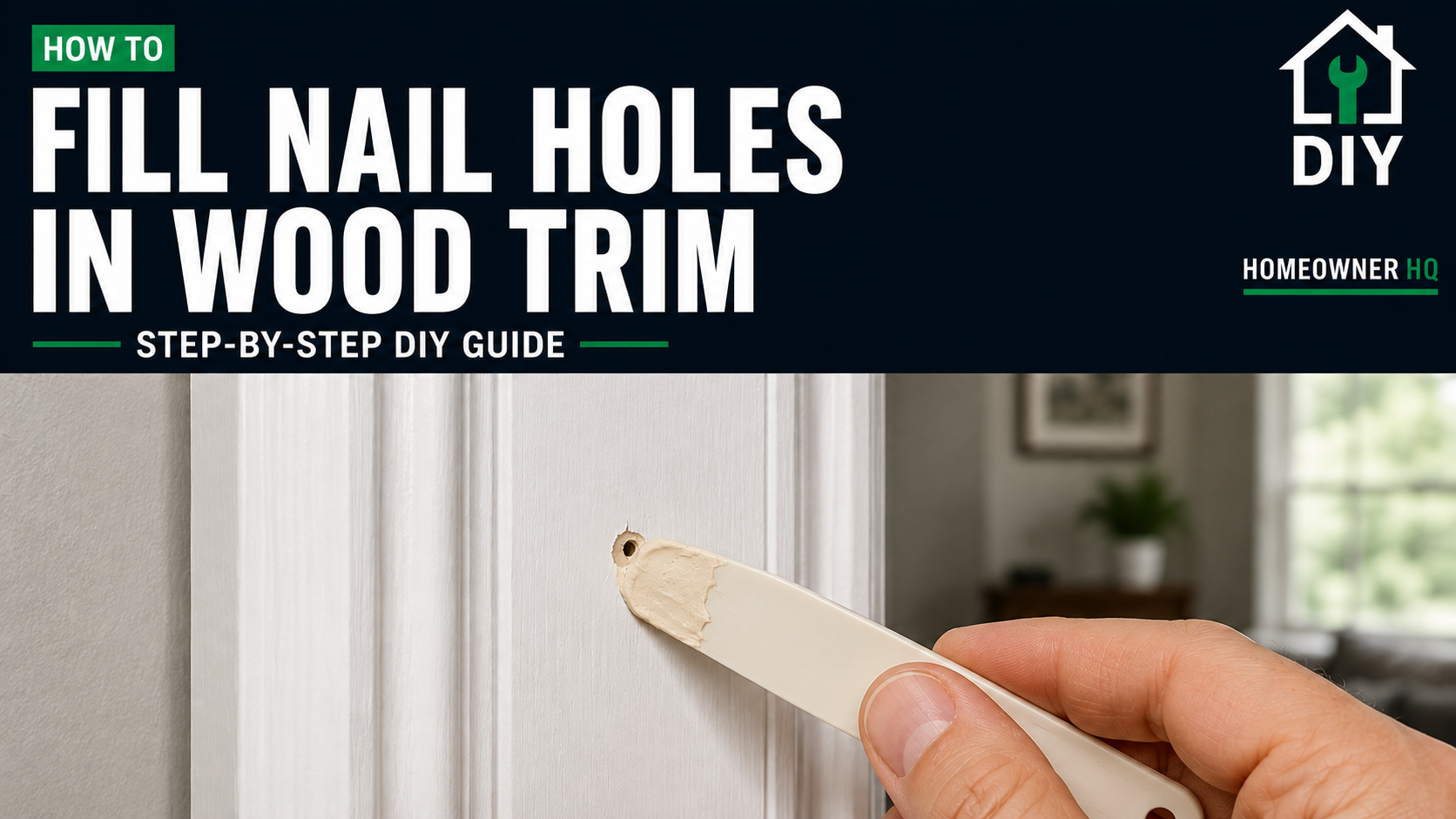
Press a small amount of filler firmly into the nail hole with your finger or a putty knife.
Leave the filler slightly proud of the surface if the product shrinks as it dries.
What You Should See: The hole should be completely filled with no visible depression.
Step 2: Let It Dry
Allow the filler to dry according to the manufacturer’s directions.
💡 Pro Tip: Avoid piling on excess filler. The less you leave around the hole, the less sanding you’ll have to do.
Step 3: Sand It Smooth
Lightly sand the repair with fine-grit sandpaper until it’s flush with the surrounding trim.
Wipe away the sanding dust.
Step 4: Touch Up the Paint
Prime the repair if needed, then apply matching paint. If you’re refreshing more than just the repaired spots, follow our How to Paint Trim guide for prepping and repainting the entire piece.
What You Should See: Once painted, the nail hole should blend into the surrounding trim.
🚫 Common Mistakes to Avoid
- Leaving nail heads above the surface
- Using too much filler
- Sanding before the filler is dry
- Sanding aggressively and damaging the trim
- Painting over sanding dust
❓ Frequently Asked Questions
Should I use caulk to fill nail holes?
Wood filler or spackle is generally better because it dries harder and can be sanded smooth.
Do I need to prime wood filler before painting?
Some fillers can absorb paint differently than the surrounding trim, so spot-priming can help produce an even finish.
Can I fill nail holes with my finger?
Yes. For tiny finish-nail holes, pressing filler in with your finger is often the quickest method.
👷 When to Call a Professional
This is usually an easy DIY repair. Consider professional help only if the trim itself is extensively damaged or needs replacement.