
Safety First
Wear safety glasses when scraping or sanding. Use a paintable interior caulk, and avoid filling large gaps until you’ve checked whether the baseboard itself is loose.
Time
20-45 Minutes
Difficulty
Easy
Cost
$5-$15
🔧 Tools
- Caulk gun
- Utility knife
- Damp cloth
📦 Materials
- Paintable acrylic latex caulk
- Painter’s tape, optional
- Matching paint, if needed
🔎 Common Baseboard Gaps
Small gaps commonly appear between the baseboard and wall, at inside corners, or where two pieces of trim meet.
If the baseboard itself is pulling away from the wall, secure it before caulking. If the trim is cracked, chipped, or otherwise damaged, repair the damaged baseboard before filling the surrounding gaps.
🛒 Before You Buy
Choose a flexible, paintable caulk designed for interior trim. Avoid silicone caulk if you plan to paint over the repair.
🧰 Before You Start
Remove old or loose caulk and clean the gap. Make sure the baseboard is firmly attached and the area is dry. If you have visible finish-nail holes from installing or securing the trim, fill the nail holes in the wood trim before applying your final paint.
Step 1: Apply the Caulk
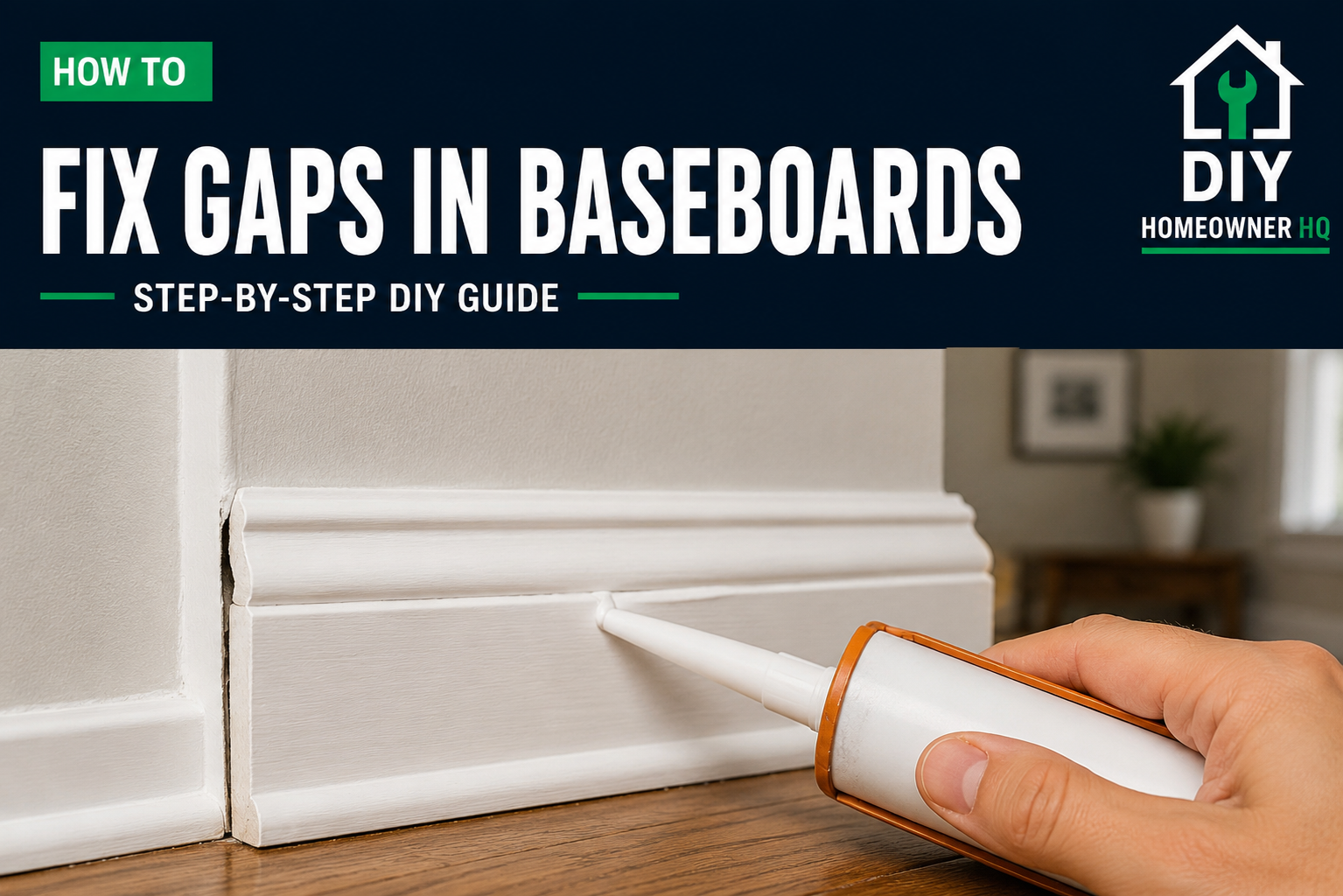
Cut a small opening in the caulk tube and run a thin, continuous bead along the gap.
💡 Pro Tip: Start with a smaller bead than you think you need. You can always add more.
Step 2: Smooth the Bead
Run a damp finger or caulk-finishing tool along the bead to press the caulk into the gap and smooth the surface.
Wipe away excess immediately.
What You Should See: A smooth caulk line that blends the baseboard into the wall.
Step 3: Let It Dry
Allow the caulk to dry according to the manufacturer’s instructions.
Paint over the repair if needed.
🚫 Common Mistakes to Avoid
- Caulking over loose baseboards
- Applying too much caulk
- Using non-paintable silicone
- Leaving old, loose caulk underneath
- Caulking the bottom edge to a floating wood or laminate floor
❓ Frequently Asked Questions
Should you caulk between baseboards and the wall?
Yes. Small gaps along painted baseboards are commonly finished with paintable caulk.
What about large gaps?
Large or uneven gaps may indicate improperly installed, warped, or loose trim and should be corrected before caulking. If the baseboard is badly damaged or won’t sit properly against the wall, replacing the baseboard may give you a better result than trying to hide the gap with caulk.
Should I caulk between baseboards and the floor?
Usually not with floating flooring such as laminate or many engineered floors, since the flooring needs room to expand and contract. Small gaps along fixed surfaces may sometimes be caulked, but don’t use caulk to hide a large or uneven flooring gap.
👷 When to Call a Professional
Most baseboard gaps are an easy DIY fix. Consider professional help if large gaps keep returning or appear to be caused by significant wall or floor movement.
🔗 Related DIY Guides
How to Repair Damaged Baseboards