
Safety First
Use a sturdy step ladder and wear safety glasses when scraping or sanding overhead. Make sure loose crown molding is secured before filling any gaps.
Time
30-60 Minutes
Difficulty
Easy
Cost
$10-$30
🔧 Tools
- Caulk gun
- Utility knife
- Damp cloth
- Putty knife
📦 Materials
- Paintable acrylic latex caulk
- Wood filler, if needed
- Matching paint
🔎 Common Crown Molding Gaps
Small gaps commonly appear where crown molding meets the wall or ceiling, at inside corners, or where two pieces join.
If the molding itself is loose, secure it before filling the gap. If the problem comes from poorly fitted or improperly installed molding, see How to Install Crown Molding before trying to hide the gap with caulk.
🛒 Before You Buy
Use flexible, paintable caulk for small gaps along walls, ceilings, and corners. Wood filler works better for small imperfections in the molding itself. If the wood is actually cracked or split rather than simply separated at a joint, follow How to Repair Cracked or Split Wood Trim instead.
🧰 Before You Start
Remove loose or cracked caulk and clean the area. Check that the crown molding is firmly attached before making the cosmetic repair.
Step 1: Apply the Caulk
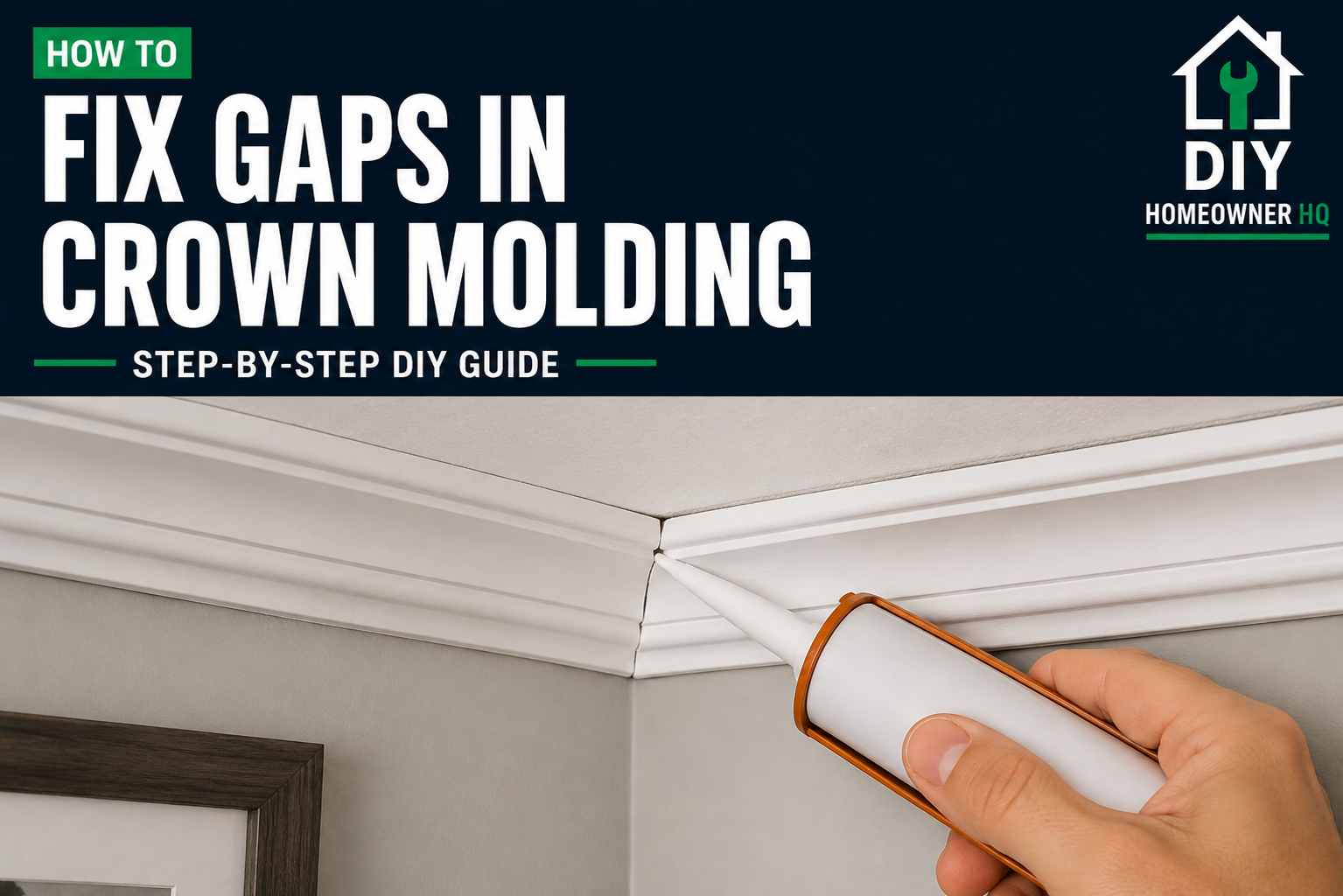
Cut a small opening in the caulk tube and apply a thin bead directly into the gap.
💡 Pro Tip: Start small. Too much caulk creates more cleanup and can make the repair more noticeable.
Step 2: Smooth the Caulk
Run a damp finger or caulk-finishing tool along the bead.
Wipe away excess before it begins to dry.
What You Should See: A smooth, continuous joint between the crown molding and surrounding surface.
Step 3: Let It Dry and Paint
Allow the caulk to dry according to the manufacturer’s instructions.
Touch up the area with matching paint if needed.
🚫 Common Mistakes to Avoid
- Caulking loose crown molding
- Applying too much caulk
- Using non-paintable silicone
- Caulking over old, failing caulk
- Trying to hide very large gaps with caulk alone
❓ Frequently Asked Questions
Why do gaps appear in crown molding?
Normal seasonal movement, settling, loose molding, or imperfect joints can cause gaps to appear over time.
Should I use caulk or wood filler?
Use flexible caulk where molding meets a wall, ceiling, or another piece of trim. Use wood filler for damage in the wood itself. The same basic approach applies when fixing gaps in baseboards, where flexible caulk is typically best for small gaps between the trim and wall.
What if the gap keeps coming back?
Recurring gaps may indicate loose molding or ongoing movement that should be corrected before recaulking.
👷 When to Call a Professional
Consider professional help if the crown molding is pulling away significantly, large sections are loose, or gaps continue returning after repair.