
Safety First
Keep the stairs clear while working and wear safety glasses when drilling or driving screws. Make sure any repair doesn’t leave exposed fasteners or create a tripping hazard.
Time
30-60 Minutes
Difficulty
Easy
Cost
$5-$20
🔧 Tools
- Drill/driver
- Hammer
- Stud finder
- Pry bar, if needed
📦 Materials
- Wood screws
- Finish nails, if needed
- Wood glue
- Wood shims, if needed
🔎 What Causes Squeaky Stairs?
Most stair squeaks happen when the tread moves against the riser, stringer, or a loose fastener. Finding the exact spot is the key to fixing it.
🛒 Before You Buy
Determine whether you can access the underside of the stairs. Repairs from underneath can be easier to hide, but squeaks can also be fixed from above.
🧰 Before You Start
Walk slowly across each stair and listen for the squeak. Have someone step on the stair while you watch for movement if possible. Like tracking down a squeaky floor, pinpointing exactly where the wood is moving makes the repair much easier.
Step 1: Find the Squeak
Step on different areas of the tread to pinpoint where the movement occurs.
What You Should See: The tread may move slightly when pressure is applied near the squeaky area.
Step 2: Secure the Loose Tread
Drive a trim-head or finish screw through the tread and into the stringer below. Make sure the screw actually reaches the stringer and set the head slightly below the wood surface so the small hole can be filled afterward.
If working from underneath, secure the tread to the riser or stringer from below when possible. This keeps the repair hidden and avoids putting a visible fastener through the finished tread.
💡 Pro Tip: Drill a small pilot hole first to reduce the chance of splitting the wood.
Step 3: Shim From Below if Needed
If you can access the underside and find a gap between the tread and stringer, gently insert a thin wood shim with wood glue.
Don’t force the shim too far or you could lift the tread.
Step 4: Test the Stair
Walk across the repaired stair several times.
What You Should See: The tread should feel solid and the squeak should be gone or noticeably reduced.
🚫 Common Mistakes to Avoid
- Driving screws without locating the stringer
- Forcing shims too far
- Using fasteners that are too long
- Leaving screw heads exposed
- Ignoring loose or damaged stair components
❓ Frequently Asked Questions
Why do stairs start squeaking?
Wood movement, loose fasteners, and small gaps between stair components are the most common causes.
Can you fix squeaky stairs from above?
Yes. Screws can secure a loose tread from above when the underside isn’t accessible.
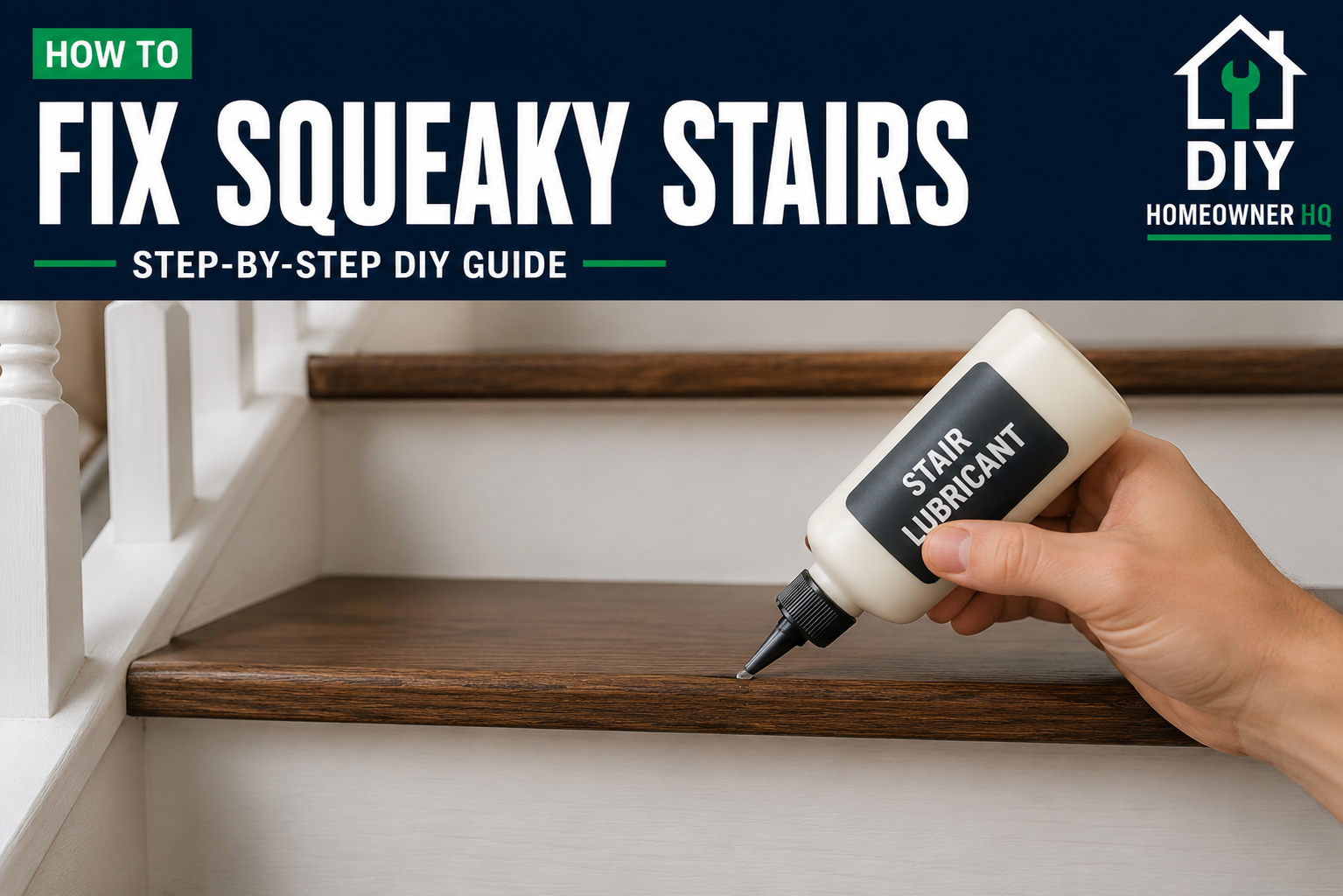
Can I use lubricant on squeaky stairs?
Lubricants may temporarily reduce friction, but securing the moving wood is usually a better long-term repair.
👷 When to Call a Professional
Call a professional if the stairs feel loose, sag, have damaged stringers, or show signs of structural movement.
🔗 Related DIY Guides
How to Fix a Loose Stair Railing