
Safety First
Remove everything from the shelf before working on it. Wear safety glasses when drilling, and make sure replacement anchors or screws are rated for the shelf and expected load.
Before drilling new holes or using longer screws, consider electrical wiring or plumbing that may be hidden behind the wall. Be especially cautious near outlets, switches, kitchens, and bathrooms.
Time
20-45 Minutes
Difficulty
Easy
Cost
$5-$20
🔧 Tools
- Drill/driver
- Screwdriver
- Level
- Stud finder
📦 Materials
- Replacement screws or anchors
- Wall plugs, if needed
🔎 Signs the Shelf Is Loose
- The shelf tilts downward
- It moves when lightly pushed
- The bracket pulls away from the wall
- Screws spin without tightening
🛒 Before You Buy
Check what type of wall you have and how the shelf is mounted. Use anchors rated for the shelf and the weight you plan to place on it.
🧰 Before You Start
Remove everything from the shelf and inspect the mounting hardware. If a screw head is damaged and you can’t remove it normally, follow our guide to remove a stripped screw before replacing the hardware.
Step 1: Tighten the Hardware
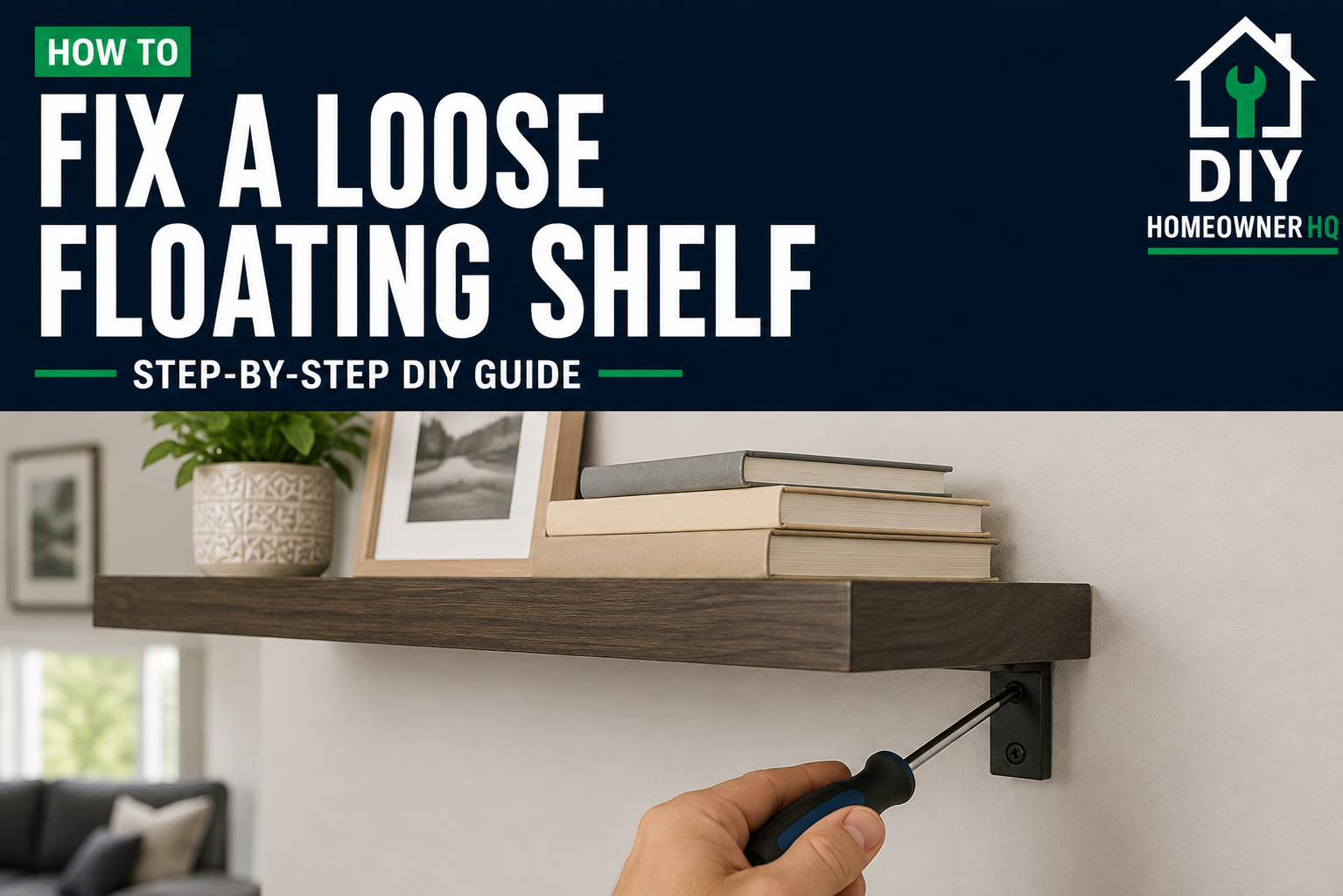
Tighten the screws securing the shelf to its bracket and the bracket to the wall.
What You Should See: The shelf should stop moving and sit firmly against the wall.
Step 2: Replace Loose Anchors
If a screw spins without tightening, remove it and inspect the wall anchor.
Replace damaged or undersized anchors with properly rated ones. If the bracket needs to be completely remounted, follow the mounting and leveling process in our guide to install a floating shelf.
💡 Pro Tip: Whenever possible, secure at least part of the mounting bracket directly into a wall stud.
Step 3: Level the Shelf
Place a level on top of the shelf and make small adjustments before fully tightening the hardware.
If Yours Looks Different: If the shelf still slopes after the bracket is secure, the bracket itself may be bent or damaged.
Step 4: Test the Repair
Apply light pressure to the shelf before putting anything back on it.
Once it feels solid, reload the shelf without exceeding its weight rating.
🚫 Common Mistakes to Avoid
- Tightening screws into failed anchors
- Using anchors that are too small
- Overloading the shelf
- Skipping the level check
- Putting items back before testing the repair
❓ Frequently Asked Questions
Why does my floating shelf keep coming loose?
Loose screws, failed anchors, missed studs, or too much weight are the most common causes.
Can I reuse the existing wall anchors?
Only if they are still tight and undamaged. Loose or damaged anchors should be replaced.
Should a floating shelf be mounted into studs?
Stud mounting provides the strongest support and is preferred whenever the bracket layout allows it.
👷 When to Call a Professional
Consider professional help if the wall is badly damaged, the mounting area keeps failing, or the shelf is supporting heavy or valuable items.
🔗 Related DIY Guides
How to Install a Floating Shelf
How to Remove a Stripped Screw