
Safety First
Wear safety glasses when drilling or driving screws. Before using long screws, make sure there are no electrical wires or plumbing lines in the screw path. Tighten gradually to avoid pulling the frame out of alignment.
Time
30-60 Minutes
Difficulty
Easy
Cost
$10-$30
🔧 Tools
- Drill/driver
- Screwdriver
- Level
- Tape measure
- Utility knife
- Pry bar
- Hammer
📦 Materials
- 2½–3-inch wood or structural screws
- Wood shims
- Finish nails, if needed
- Wood filler or paintable caulk
- Touch-up paint, if needed
🔎 Signs Your Door Frame Is Loose
- The jamb moves when you push on it
- The door shifts when opening or closing
- The door rubs against the jamb
- The door no longer latches consistently
- Trim is separating from the wall
- Gaps around the door have changed
- Screws in the jamb or hinges continually loosen
🛒 Before You Buy
Determine which part of the frame is actually moving. Sometimes the jamb is loose from the framing behind it, while other times the problem is simply loose hinges or trim.
For a loose jamb, 2½–3-inch screws are usually long enough to pass through the jamb and shims and reach the wall framing behind it.
Pick up a package of wood shims as well. They allow you to support and position the jamb without pulling it out of alignment when tightening the screws.
🧰 Before You Start
Open and close the door while watching the gaps around all four sides.
Use a level to check the hinge-side and latch-side jambs. Also check whether the door itself is sagging.
Push gently against different areas of the jamb to identify exactly where the movement is coming from.
Step 1: Check the Hinges First
Before working on the frame itself, tighten all of the hinge screws.
If a hinge screw spins without tightening, the screw hole may be stripped rather than the entire frame being loose. Also inspect the surrounding wood for cracks or splitting. If the jamb itself is damaged, follow How to Repair a Split Door Jamb before securing the frame.
What You Should See: The hinges should sit firmly against the jamb without shifting when the door moves.
If Yours Looks Different: If the hinge is secure but the entire jamb moves with it, the jamb likely needs to be secured to the framing.
Step 2: Locate the Loose Area
Push gently against the jamb while watching for movement.
Check the hinge side, latch side, and top of the frame. You may only need to secure one section rather than the entire door frame.
Look for existing fasteners or small filled holes that may indicate where the jamb was originally attached.
💡 Pro Tip: Check the door gap before tightening anything. You want to secure the jamb in its correct position—not simply pull it as tight as possible against the framing.
Step 3: Shim the Jamb if Needed
If there is space between the jamb and wall framing, carefully insert wood shims behind the loose area.
Use opposing shims when possible so you can make small adjustments without twisting the jamb.
Check the jamb with a level and close the door occasionally to verify the gap remains even.
What You Should See: The jamb should feel supported without bowing inward toward the door.
Step 4: Secure the Jamb to the Framing
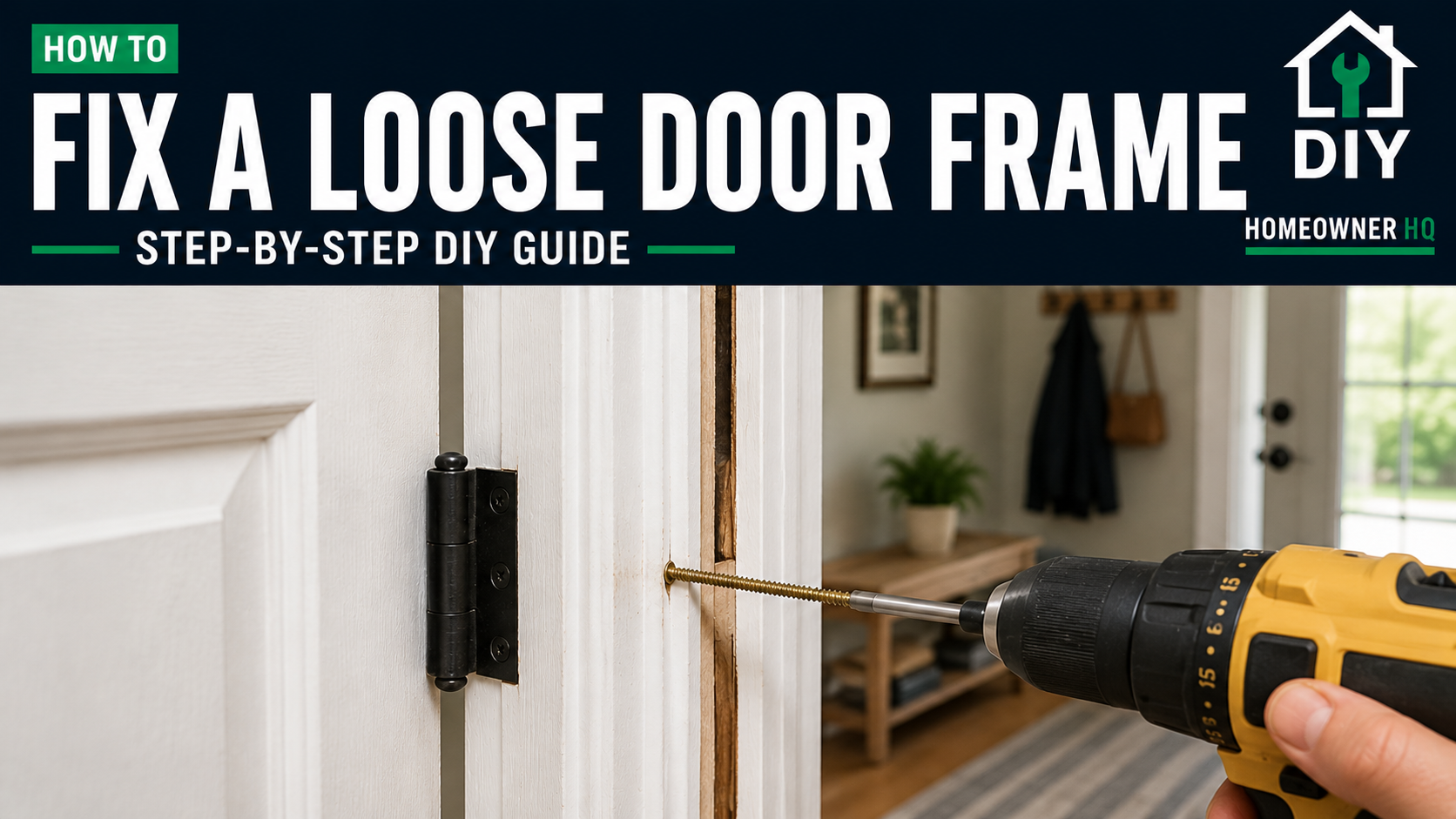
Drill a small pilot hole through the side of the jamb at the loose area.
Drive a 2½–3-inch screw through the jamb and shims and into the framing behind it.
Stop when the screw is snug and the jamb no longer moves.
💡 Pro Tip: Tighten the screw gradually while watching the door gap. Driving it too far can pull the jamb inward and cause the door to rub or stop latching. Use wood, construction, or structural screws suitable for fastening into framing—not brittle drywall screws.
Step 5: Check the Door Alignment
Open and close the door several times.
The gap between the door and jamb should remain relatively even, and the door should latch without needing to be pushed or lifted. If the frame is now solid but the door still won’t shut properly, use How to Fix a Door That Won’t Close to diagnose the remaining alignment problem.
Problem: The door suddenly rubs after tightening the frame.
Back the screw out slightly. The jamb may have been pulled too far toward the framing.
Problem: The jamb still moves.
The screw may not have reached solid framing. Verify the screw length and placement before adding another fastener.
Step 6: Secure Any Loose Trim
If the casing around the door loosened while the frame was moving, press it back into position and secure it with finish nails.
If the casing is cracked, badly damaged, or no longer fits properly, replacing the door trim may give you a cleaner finished repair.
Fill small nail holes or gaps with wood filler or paintable caulk as appropriate.
Touch up the paint once everything is dry.
Step 7: Give the Door a Final Test
Open and close the door several times and test the latch.
Push gently against the repaired section of jamb. It should remain solid without visible movement.
What You Should See: A firmly secured frame, an even door gap, and a door that opens, closes, and latches smoothly.
🚫 Common Mistakes to Avoid
- Assuming loose trim means the entire frame is loose
- Driving long screws without checking the screw path
- Skipping the shims when there is a large gap behind the jamb
- Overtightening screws and bowing the jamb
- Securing the frame without checking it for level
- Ignoring loose or stripped hinge screws
- Using expanding foam as the primary way to secure a loose jamb
❓ Frequently Asked Questions
Why does my door frame move when I close the door?
The jamb may not be securely fastened to the wall framing, or the original fasteners may have loosened over time.
Can I just screw the door frame into the wall?
Yes, provided the screw reaches solid framing and its path is clear of utilities. The jamb should also be properly positioned and shimmed so tightening the screw doesn’t distort the opening.
What size screws should I use for a loose door jamb?
A 2½–3-inch wood or structural screw is commonly sufficient to pass through the jamb and shims and reach the framing behind it.
Do I need to remove the door trim?
Not always. Minor movement can often be corrected without removing the casing. If you need to reposition or add shims behind the jamb, removing a section of trim may make the repair easier.
Why won’t my door close after tightening the frame?
The screw may have pulled the jamb too far inward. Back it out slightly and check the door gap again.
👷 When to Call a Professional
Consider calling a professional if the wall framing itself is damaged, the opening is badly out of square, there is significant rot or water damage, or you cannot secure the jamb without throwing the door noticeably out of alignment.
🔗 Related DIY Guides
How to Fix a Door That Won’t Close