
Safety First
Wear safety glasses when removing loose or splintered wood. Use caution with chisels, utility knives, and power tools, and check the area for hidden wiring before driving long screws into the jamb.
Time
1-2 Hours
Difficulty
Moderate
Cost
$15-$40
🔧 Tools
- Drill/driver
- Screwdriver
- Putty knife
- Utility knife or wood chisel
- Clamps
- Sandpaper
- Small pry bar, if needed
📦 Materials
- Wood glue
- Wood filler
- 2½–3-inch wood screws
- Primer
- Matching paint
- Replacement trim nails, if needed
🔎 Signs It’s Time to Repair a Split Door Jamb
- The wood around the strike plate or hinges is cracked or split
- Screws no longer tighten securely
- The strike plate is pulling away from the jamb
- The door won’t latch properly
- The crack moves or opens when the door closes
- The jamb is damaged but most of the wood is still intact
If the jamb is severely rotted, crushed, or has a large section missing, replacing the damaged section may be a better option.
🛒 Before You Buy
Take a close look at the damage before buying materials. A clean split can usually be repaired with wood glue and screws. If small pieces of wood are missing, you’ll also need wood filler to smooth the surface before painting.
For damage around a strike plate, 2½–3-inch screws can provide additional support by reaching through the jamb and into the framing behind it.
🧰 Before You Start
Open the door and inspect the entire damaged area. Remove the strike plate, hinge, or other hardware covering the split.
Check whether the door is sticking, sagging, or hitting the jamb. If the door is rubbing against the frame, follow How to Fix a Door That Sticks so the underlying problem doesn’t put stress on the repaired jamb and cause it to split again.
Step 1: Clean Up the Split
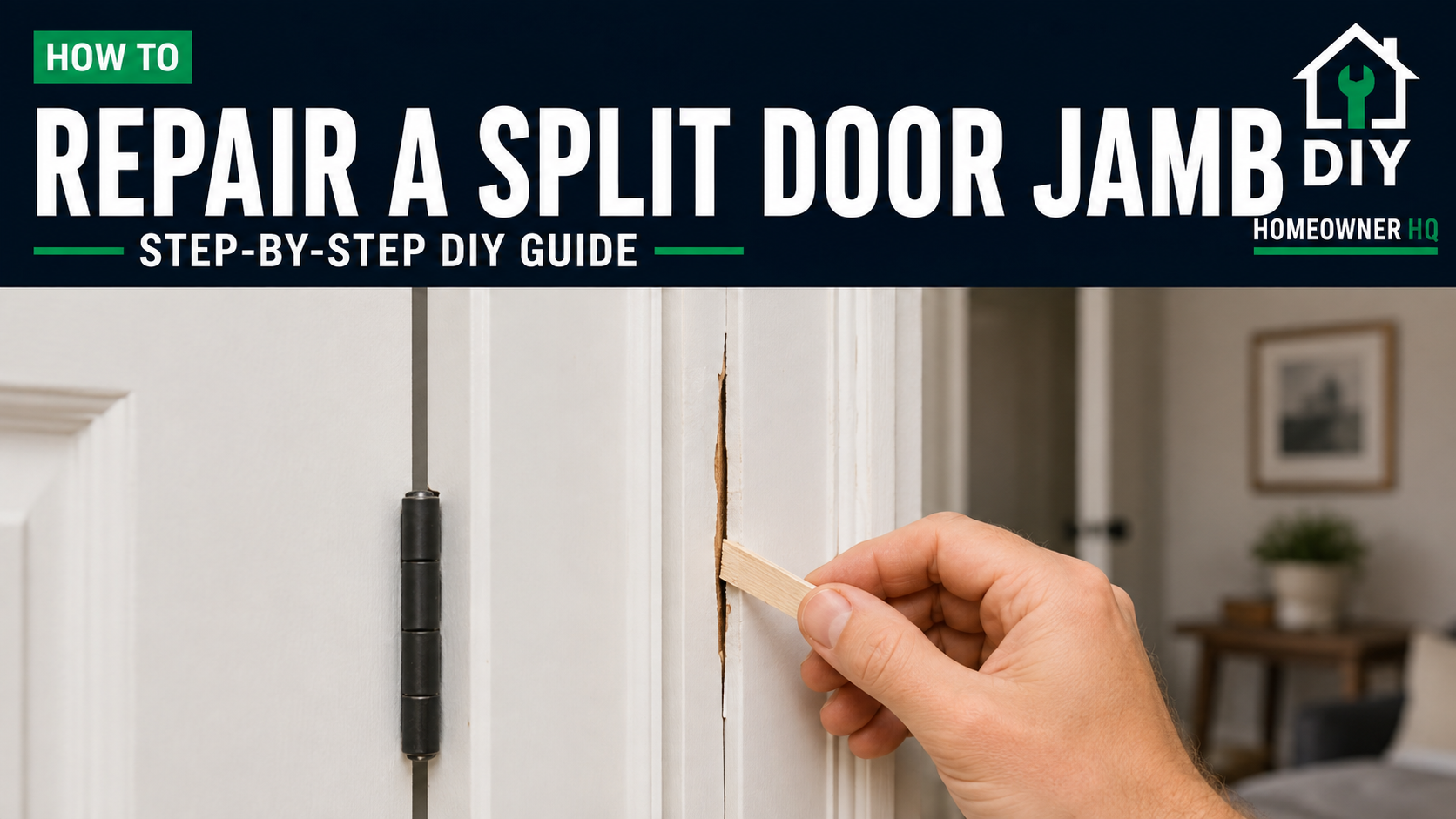
Remove any loose splinters or damaged material that prevents the crack from closing properly. Keep solid pieces of wood in place whenever possible.
Use a utility knife or chisel carefully to clean out debris inside the split.
What You Should See: The two sides of the split should be able to move back toward their original position.
If Yours Looks Different: If the wood crumbles or large pieces are missing, the jamb may need a larger patch or partial replacement.
Step 2: Apply Wood Glue
Gently open the crack just enough to work wood glue deep inside.
Use a thin piece of scrap wood or putty knife to spread the glue across the surfaces inside the split.
💡 Pro Tip: Don’t force the crack farther apart than necessary. You only need enough room to get glue between the damaged surfaces.
Step 3: Clamp the Jamb Together
Press the split wood back into its original position and install clamps across the repair.
Tighten them until the crack closes, but don’t overtighten and deform the jamb. Wipe away excess glue with a damp rag.
Allow the glue to cure according to the manufacturer’s instructions.
What You Should See: The crack should close tightly and the jamb should look straight again.
Step 4: Reinforce the Repair
If the split is in a high-stress area, such as around a hinge or strike plate, reinforce the repair after the glue has cured.
Drill pilot holes where additional reinforcement is needed. Use appropriately sized wood or construction screws that reach solid framing when securing hardware or reinforcing the jamb. Avoid adding long screws where they aren’t necessary.
💡 Pro Tip: Pilot holes are important near a previously split area because they reduce the chance of cracking the wood again.
Step 5: Fill and Sand the Damage
Apply wood filler over remaining cracks, screw heads, and small damaged areas.
Allow the filler to dry completely, then sand everything smooth and flush with the surrounding jamb.
What You Should See: The repaired section should feel solid with no raised edges or noticeable gaps.
Step 6: Prime, Paint, and Reinstall the Hardware
Prime any exposed wood and filler, then apply matching paint once the primer dries.
Reinstall the strike plate, hinge, or other hardware you removed.
If the original screw holes were stripped, use longer screws that can reach solid framing rather than reinstalling short screws into damaged wood.
Step 7: Test the Door
Open and close the door several times.
Make sure the door swings freely, closes without hitting the repaired jamb, and latches normally.
If Yours Looks Different: If the jamb is solid but the door still won’t shut or latch correctly, follow How to Fix a Door That Won’t Close to diagnose the remaining alignment problem.
🚫 Common Mistakes to Avoid
- Using wood filler as the only repair for a structural split
- Failing to work glue deep into the crack
- Driving screws without pilot holes
- Overtightening clamps or screws
- Painting before the filler has completely dried
- Ignoring a sticking or sagging door that caused the damage
- Attempting to repair severely rotted or destroyed jamb material
❓ Frequently Asked Questions
Can a split door jamb be repaired without replacing it?
Yes. If most of the jamb is still intact, wood glue, clamps, and screws can often restore it without replacing the entire jamb.
Can I repair a split door jamb with wood filler?
Wood filler can hide minor surface damage, but it shouldn’t be relied on to hold a structural split together. Glue and mechanical reinforcement provide the strength.
Why did my door jamb split?
Common causes include impact damage, forced entry, loose hardware, screws installed too close to the edge of the wood, or a door repeatedly hitting the jamb.
How long should I leave the clamps on?
Follow the curing instructions for your wood glue. Many wood glues need at least 30–60 minutes of clamping time, with additional time before the repair reaches full strength.
Should I use longer screws around the strike plate?
Longer screws can strengthen the strike plate by securing it into the framing behind the jamb. Check the screw path for utilities before driving long screws.
👷 When to Call a Professional
Consider calling a professional if the jamb is severely damaged from forced entry, large sections of wood are missing, or an exterior door can no longer close and lock securely. If the jamb is repairable but the surrounding frame moves or feels unstable, first determine whether you’re dealing with a loose door frame that needs to be secured.
🔗 Related DIY Guides
How to Fix a Door That Won’t Close