
Safety First
A circuit breaker can trip because of an overload, short circuit, ground fault, wiring problem, or a failing breaker. Never assume the breaker itself is bad just because it trips. For basic troubleshooting, operate only the breaker handle and inspect for obvious warning signs. Do not remove the electrical panel cover or touch wiring or components inside the panel. If the breaker repeatedly trips, feels unusually hot, smells burnt, buzzes, sparks, or shows visible damage, leave it OFF and call a licensed electrician.
Time
15-30 Minutes
Difficulty
Easy
Cost
$0-$25
🔧 Tools
- Flashlight
- Plug-in lamp or other simple test device
- Optional: non-contact voltage tester
- Optional: plug-in outlet tester
📦 Materials
No materials are normally required for basic troubleshooting.
Do not purchase a replacement breaker until you have good reason to believe the breaker itself is actually the problem. A breaker that trips is often responding correctly to a problem elsewhere on the circuit.
📝 Before You Start
Pay attention to what the breaker is doing and when the problem occurs.
Ask yourself:
- Does the breaker trip immediately after being reset?
- Does it trip only when a certain appliance is running?
- Does it trip when several devices are being used at once?
- Does the breaker feel loose when you operate the handle?
- Has the circuit recently started having problems?
- Are there burning smells, buzzing sounds, discoloration, or unusual heat?
If you’re unsure what the breaker controls, use How to Find Which Breaker Controls an Outlet or Light before troubleshooting further.
💡 Pro Tip: A breaker that keeps tripping isn’t automatically a bad breaker. Overloads and problems with appliances or wiring are often the actual cause.
Step 1: Look at the Breaker Position
Open the electrical panel door without removing the panel cover.
Look at the breaker you’re troubleshooting.
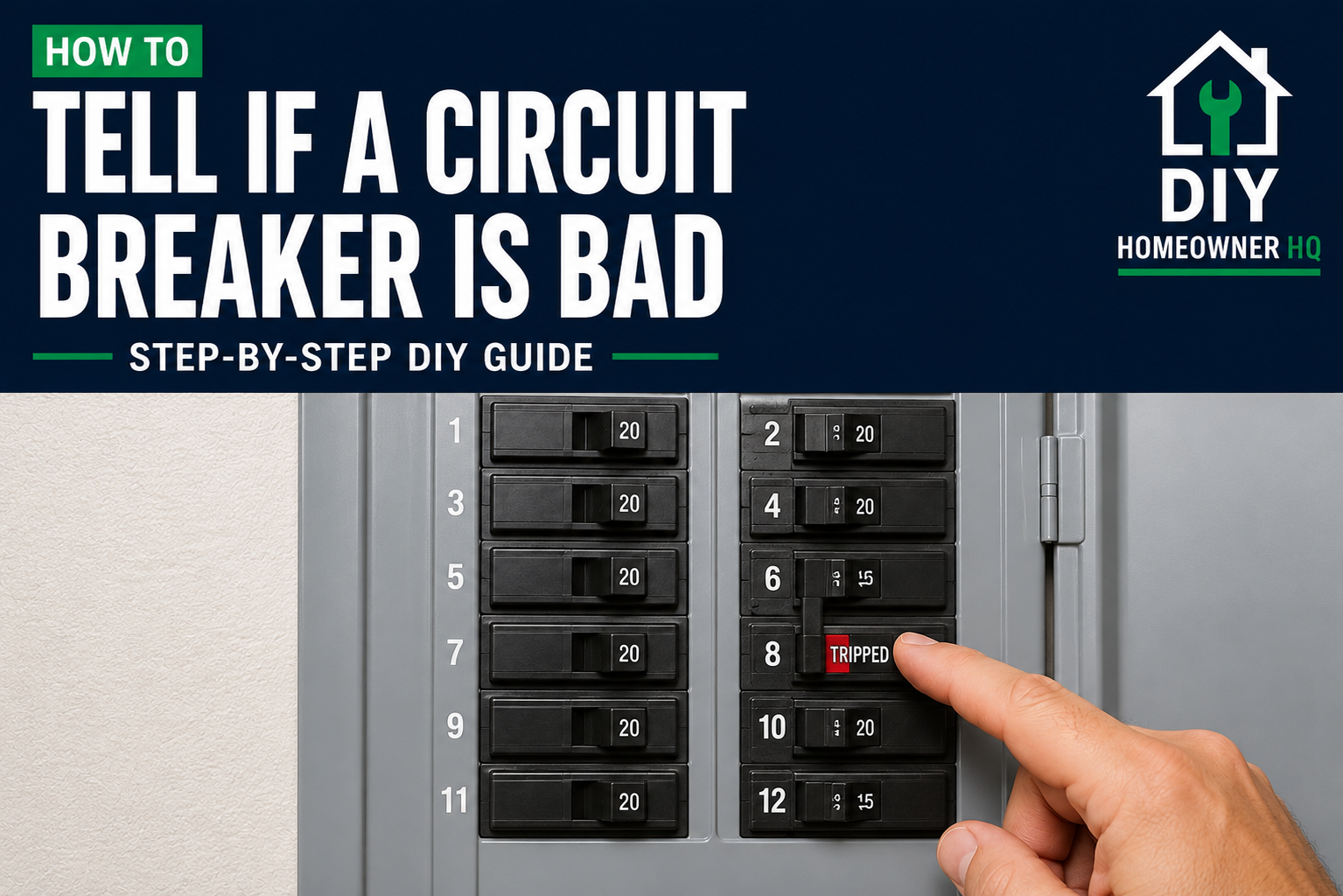
A tripped breaker may sit somewhere between the ON and OFF positions, although the exact appearance varies by manufacturer.
What You Should See: The breaker handle should have a firm, defined position.
If Yours Looks Different: A handle that appears loose, damaged, or doesn’t remain in position may indicate a problem with the breaker.
Step 2: Reset the Breaker Once
Move the breaker firmly to the OFF position and then back to ON.
Some breakers must be moved completely OFF before they will reset.
For more detail, see How to Reset a Tripped Circuit Breaker.
What You Should See: The breaker should click firmly into the ON position and remain there.
If Yours Looks Different: If it immediately trips again, don’t repeatedly reset it. A short circuit, ground fault, faulty appliance, wiring problem, or defective breaker may be present.
Step 3: Reduce the Load on the Circuit
Turn the breaker OFF and unplug portable devices supplied by the affected circuit.
Pay particular attention to high-wattage devices such as:
- Space heaters
- Hair dryers
- Microwaves
- Toasters
- Portable air conditioners
- Vacuum cleaners
- Power tools
Reset the breaker once with those loads removed.
What You Should See: If the breaker remains ON after reducing the load, the original problem may have been an overloaded circuit rather than a bad breaker.
If Yours Looks Different: If it continues tripping with the obvious loads disconnected, further troubleshooting is needed.
If you’re not sure whether the circuit is overloaded or something more serious is happening, see Why Does My Circuit Breaker Keep Tripping?.
Step 4: Check Whether One Device Causes the Trip
If the breaker remains ON with devices unplugged, reconnect them one at a time.
Allow each device to operate normally before moving to the next one.
If the breaker consistently trips when one particular appliance or device is connected or turned on, stop using that device.
What You Should See: A healthy circuit should continue operating normally as reasonable loads are restored.
If Yours Looks Different: If one device repeatedly causes the trip, the appliance or its cord may be faulty rather than the breaker.
Step 5: Pay Attention to the Breaker Handle
With the panel cover remaining in place, operate only the external breaker handle.
A breaker should normally move between positions with a noticeable mechanical action.
Potential warning signs include:
- An unusually loose handle
- A handle that won’t remain ON
- Visible cracking or damage
- A breaker that doesn’t appear to reset normally
What You Should See: The breaker should operate firmly and remain in its selected position.
If Yours Looks Different: A mechanically loose or damaged breaker should be evaluated by a licensed electrician.
Step 6: Check for Heat, Smells, or Unusual Sounds
Without removing the panel cover, pay attention to the area around the breaker.
Warning signs include:
- Burning or melted-plastic odors
- Buzzing
- Crackling
- Popping
- Visible discoloration
- Signs of overheating
Do not touch a breaker or panel that appears damaged or unusually hot.
What You Should See: Under normal conditions, there shouldn’t be burning odors, crackling, visible damage, or excessive heat.
If Yours Looks Different: Leave the breaker OFF and contact a licensed electrician.
Step 7: Consider the Pattern of the Trips
How the breaker behaves can provide important clues.
If it trips only when several devices are operating, an overload is more likely.
If it trips whenever one particular appliance starts, suspect the appliance or its circuit load.
If it trips immediately with the obvious loads disconnected, a short circuit, ground fault, wiring problem, hardwired equipment fault, or defective breaker may be present.
If it trips randomly despite a normal load, professional diagnosis may be needed.
The trip pattern can help narrow down the problem, but it doesn’t prove that the breaker itself is defective.
Step 8: Decide Whether the Breaker Needs Professional Testing
If you’ve eliminated obvious overloads and faulty plug-in devices but the breaker continues behaving abnormally, it’s time for further diagnosis.
Testing a breaker electrically can require access to energized components inside the panel. That’s beyond the basic homeowner troubleshooting covered in this guide.
A licensed electrician can determine whether the problem is:
- The breaker
- The circuit wiring
- A loose connection
- A short circuit
- A ground fault
- Hardwired equipment
- Another electrical problem
If the breaker is confirmed defective, see How to Replace a Circuit Breaker for an overview of what replacement involves.
🔎 Troubleshooting / Common Problems
Problem: The breaker trips whenever several appliances are running.
Solution: The circuit may simply be overloaded. Reduce the electrical load before assuming the breaker is defective.
Problem: The breaker trips whenever one particular device is used.
Solution: Unplug that device and stop using it until the appliance or circuit can be checked.
Problem: The breaker trips immediately with everything obvious unplugged.
Solution: Leave the breaker OFF. A wiring fault, hardwired load, short circuit, ground fault, or defective breaker may be present.
Problem: The breaker handle feels loose.
Solution: A loose or mechanically damaged breaker may require replacement. Have it evaluated rather than repeatedly operating it.
Problem: The breaker won’t stay ON.
Solution: Don’t force it or repeatedly reset it. The breaker may be responding to a serious electrical fault.
❌ Common Mistakes to Avoid
- Assuming every tripping breaker is defective
- Repeatedly resetting a breaker that immediately trips
- Replacing a breaker before identifying the underlying problem
- Installing a higher-amperage breaker to stop trips
- Removing the electrical panel cover for basic troubleshooting
- Ignoring burning smells, buzzing, heat, or discoloration
- Continuing to use an appliance that repeatedly trips the breaker
- Assuming another outlet is on a different circuit without verifying it
Never replace a breaker with a higher-amperage model simply because the existing breaker keeps tripping. The breaker must be correctly sized for the circuit it protects.
💡 Pro Tips
💡 Pro Tip: Keep track of what is running whenever the breaker trips. A consistent pattern can help distinguish an overloaded circuit from a potentially faulty breaker.
💡 Pro Tip: If your electrical panel isn’t clearly marked, use How to Label an Electrical Panel to create an accurate circuit directory. Good labeling makes future troubleshooting much easier.
❓ FAQs
How do I know if a circuit breaker itself is bad?
Possible signs include a breaker that won’t reset or remain ON, an unusually loose or damaged handle, repeated unexplained trips after obvious loads have been eliminated, or signs of overheating or damage. These symptoms aren’t conclusive by themselves, so the circuit may need professional testing.
Can a bad breaker keep tripping?
Yes, but repeated trips can also be caused by an overloaded circuit, short circuit, ground fault, wiring problem, or faulty appliance.
Can a circuit breaker go bad without tripping?
Yes. Breakers are mechanical and electrical devices and can eventually fail. Unusual operation, visible damage, overheating, or failure to operate correctly should be investigated.
How long do circuit breakers last?
There isn’t one exact lifespan for every breaker. Age, electrical load, operating conditions, manufacturer, previous faults, and environmental conditions can all affect service life.
Should a circuit breaker feel warm?
Some warmth can occur under load, but unusual or excessive heat—especially when accompanied by odor, discoloration, buzzing, or other symptoms—should be investigated.
Can I test a circuit breaker with a multimeter?
Electrical testing inside a service panel can expose you to energized components even when an individual breaker is OFF. Homeowners who aren’t trained and equipped to work safely inside electrical panels should leave this testing to a licensed electrician.
Can I replace a bad breaker myself?
Breaker replacement requires removing the panel cover and working near components that may remain energized even when the main breaker is OFF. If you’re not experienced with electrical panel work, hire a licensed electrician.
📞 When to Call a Professional
Call a licensed electrician if:
- The breaker immediately trips after resetting
- It trips with little or no obvious load
- The breaker won’t remain ON
- The breaker handle feels loose or damaged
- You smell burning
- You hear buzzing, crackling, or popping
- You notice discoloration or melted components
- The breaker or panel appears unusually hot
- You see sparks
- There is moisture or corrosion around the panel
- You suspect damaged or loose wiring
- Diagnosing the problem would require removing the electrical panel cover
The important thing is to determine why the breaker is behaving abnormally before replacing it. A new breaker won’t correct an overload, short circuit, ground fault, or wiring problem.
🔗 Related DIY Guides
Why Does My Circuit Breaker Keep Tripping?
How to Reset a Tripped Circuit Breaker
How to Find Which Breaker Controls an Outlet or Light