
Safety First
Wear eye protection when scraping out old caulk, and use caution with utility knives or sharp scrapers. If working on exterior windows above ground level, use a properly positioned ladder and avoid overreaching.
Time
30-60 Minutes
Difficulty
Easy
Cost
$10-$25
🧰 Tools & Materials
Tools
- Caulk gun
- Utility knife or scraper
- Damp rag
Materials
- Paintable interior caulk or exterior-rated window and door caulk
🔍 Signs Your Windows Need New Caulk
- The existing caulk is cracked or peeling.
- You can feel drafts around the window. If you’re not sure where the air is getting in, see How to Fix a Drafty Window first.
- There are visible gaps between the window trim and surrounding surface.
- Exterior caulk has pulled away or deteriorated.
🛒 Before You Buy
Remove loose or failing old caulk and clean the surface. New caulk sticks best to a clean, dry surface. If the air leak is coming from where the sash meets the frame rather than a stationary joint, replacing the window weatherstripping may be the better repair.
💡 Pro Tip: Check the label before buying. Some 100% silicone caulks cannot be painted.
🔧 Before You Start
Remove loose or failing old caulk and clean the surface. New caulk sticks best to a clean, dry surface.
Step 1: Remove the Old Caulk
Carefully cut and scrape away any loose or cracked caulk.
Wipe the joint clean and let it dry.
Step 2: Cut the Caulk Tip
Cut the nozzle at roughly a 45-degree angle, starting with a small opening.
💡 Pro Tip: A smaller opening gives you much better control. You can always cut the nozzle larger if needed.
Step 3: Apply a Continuous Bead
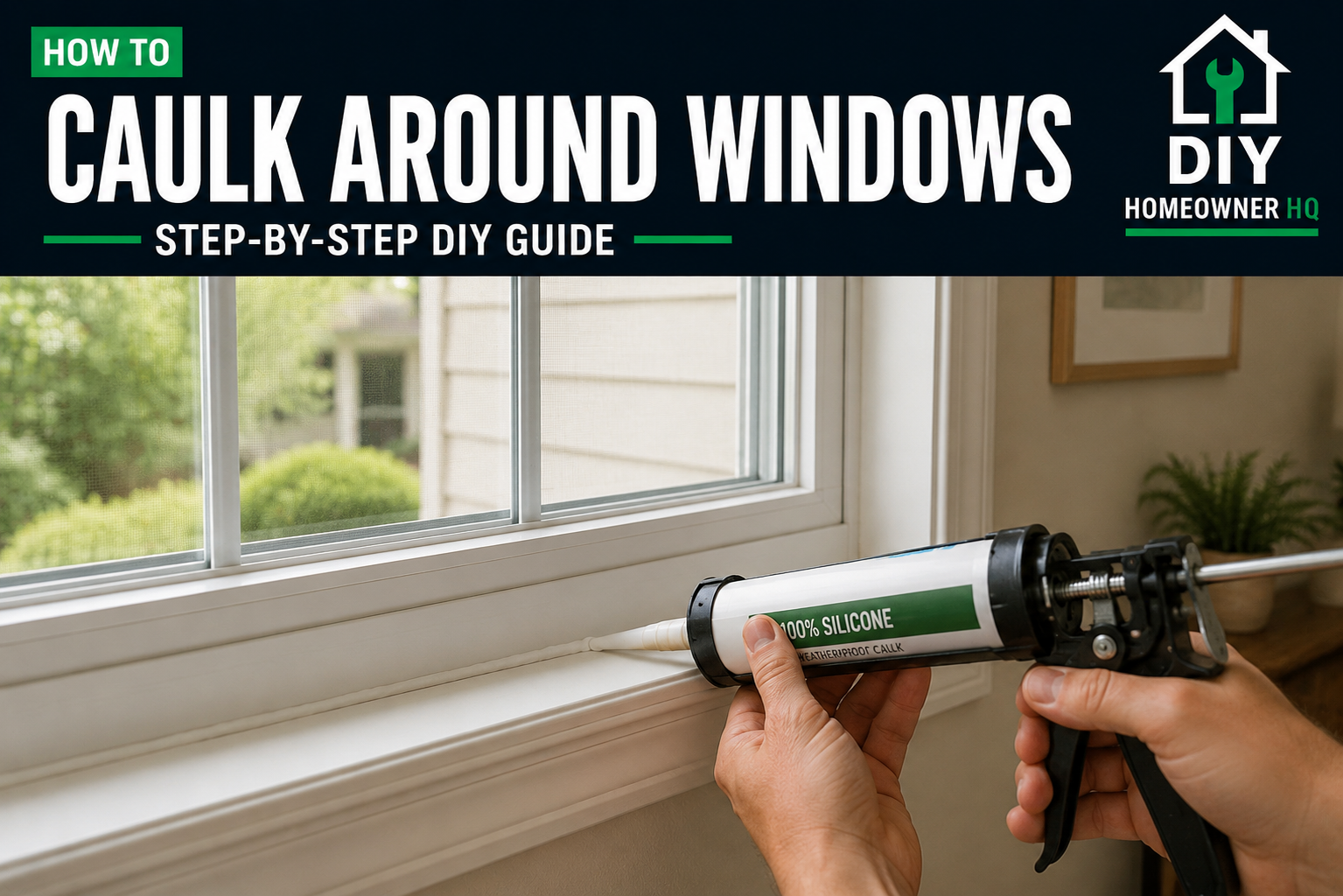
Hold the caulk gun at an angle and slowly move along the joint while applying steady pressure.
What You Should See: A thin, consistent bead filling the gap without excessive buildup.
Step 4: Smooth the Caulk
Smooth the bead with a caulk-finishing tool or damp finger before it begins to skin over.
Wipe away excess and allow the caulk to cure according to the manufacturer’s instructions.
⚠️ Common Problems
Problem: The bead looks uneven.
Use steady pressure and move the gun at a consistent speed.
Problem: New caulk won’t stick.
Make sure the old caulk, dirt, and moisture have been completely removed.
Problem: The caulk cracks again quickly.
The gap may be too large for caulk alone or the wrong type of sealant may have been used.
❓ FAQs
Should I remove old caulk first?
Yes. Removing loose or failing caulk gives the new bead a clean surface to bond to.
Can I paint over window caulk?
Only if the product is labeled paintable.
Should I caulk every gap around an exterior window?
No. Don’t block intentional drainage or weep openings built into the window.
📞 When to Call a Professional
If you find rotted wood, significant water damage, or persistent leaks around the window, the problem may be deeper than the caulk joint.