
Safety First
Wear safety glasses when sanding or removing loose wood. Be careful with utility knives and chisels, and make sure the damaged trim is secure before repairing it.
Time
30-60 Minutes
Difficulty
Easy
Cost
$10-$25
🔧 Tools
- Putty knife
- Utility knife
- Fine-grit sandpaper
- Clamps, if needed
📦 Materials
- Wood glue
- Wood filler
- Primer
- Matching paint
🔎 Signs the Trim Can Be Repaired
- The trim is cracked but still firmly attached
- A split can be pressed back together
- Small pieces are chipped or missing
- Most of the original trim is still intact
If a large section is broken, rotted, or missing, replacing the door trim may be easier and produce a better-looking repair.
🛒 Before You Buy
Use wood glue for splits that can be closed back together. Wood filler works best for filling small cracks, chips, and imperfections after the repair is secure.
🧰 Before You Start
Remove loose paint and splintered material around the damage. Make sure the trim is clean and dry before applying glue or filler.
Step 1: Glue the Split
Work wood glue into any split that can be pressed back together.
Clamp the trim gently until the glue dries.
What You Should See: The split should close tightly with the edges aligned.
Step 2: Fill the Remaining Damage
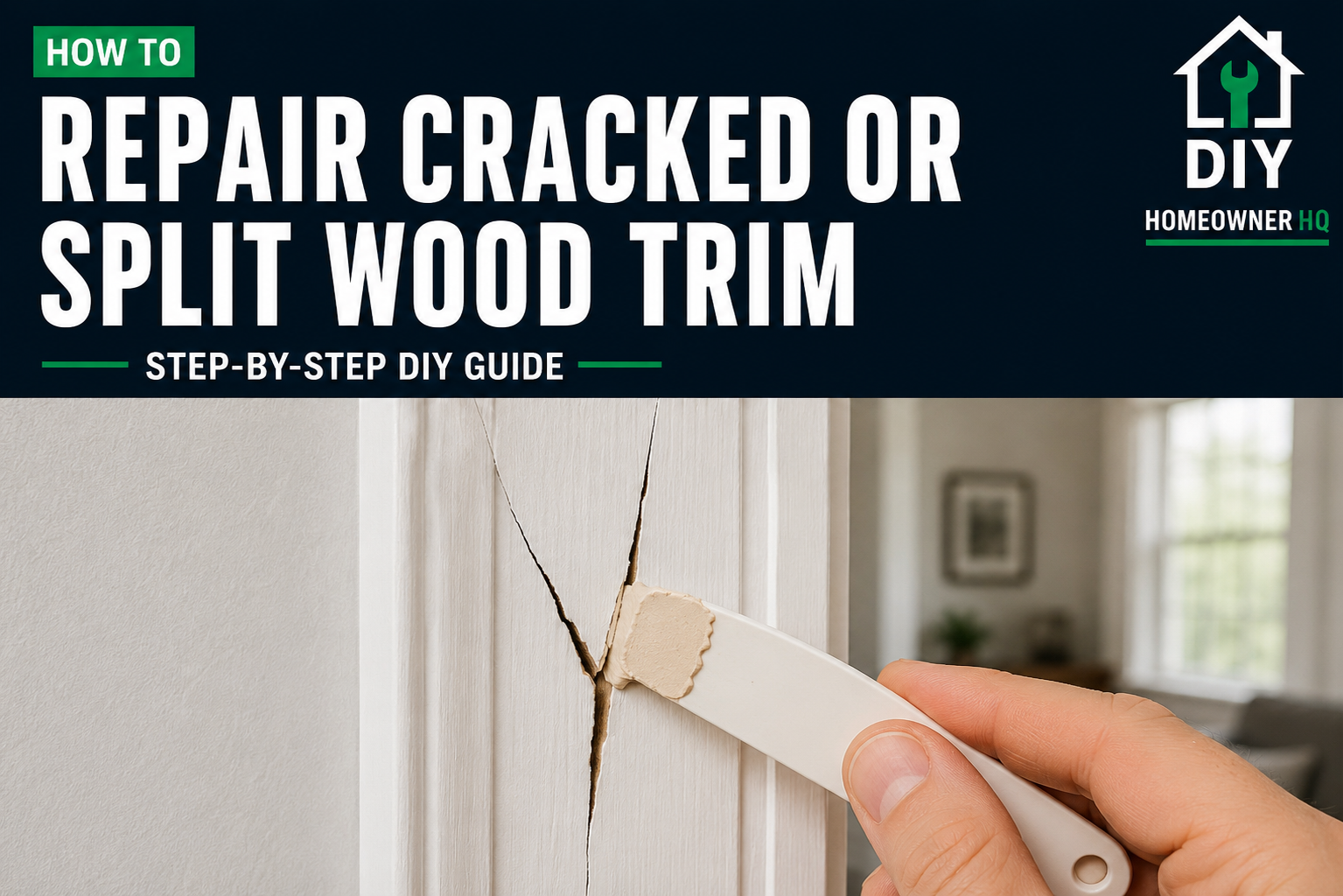
Apply wood filler over small cracks, chips, and imperfections.
Press the filler into the damaged area and leave it slightly proud of the surface.
💡 Pro Tip: Use several thin applications for deeper damage rather than one thick layer. If you’re also dealing with small finish-nail holes elsewhere on the trim, see How to Fill Nail Holes in Wood Trim for the simpler repair process.
Step 3: Sand the Repair
Once the filler is completely dry, sand it smooth with fine-grit sandpaper.
Blend the edges into the surrounding trim without removing unnecessary paint.
Step 4: Prime and Paint
Wipe away the sanding dust, spot-prime the repaired area, and apply matching paint.
What You Should See: The repaired section should blend smoothly into the surrounding trim.
🚫 Common Mistakes to Avoid
- Filling a moving split without gluing it first
- Applying filler over loose paint
- Using too much filler
- Sanding before the repair is dry
- Trying to repair badly rotted trim
❓ Frequently Asked Questions
Can cracked wood trim be repaired without replacing it?
Yes. Small cracks and clean splits can usually be glued, filled, sanded, and repainted.
Should I use wood glue or wood filler?
Use wood glue to reconnect split wood. Use filler afterward to smooth remaining cracks and surface damage.
What if a piece of trim is completely broken off?
If the piece fits cleanly, you may be able to glue it back into place. Extensive damage usually makes replacement the better option, especially when the damaged piece is part of a larger trim installation such as crown molding.
👷 When to Call a Professional
Consider professional help if the damage is extensive, the trim is custom or historic, or cracking is being caused by movement in the surrounding wall or door frame.
🔗 Related DIY Guides
How to Fill Nail Holes in Wood Trim