
Safety First
Wear gloves, closed-toe shoes, and eye protection while dethatching. If using a power dethatcher, clear the lawn of rocks, sticks, sprinkler heads, and other obstacles before starting. Keep children and pets away while the equipment is running, and shut the machine off completely before clearing tangled grass or making adjustments.
Time
1-3 Hours
Difficulty
Easy-Moderate
Cost
$15-$80
🧰 Tools & Materials
Tools
- Thatch rake or dethatching rake
- Lawn mower
- Leaf rake
- Lawn bags or wheelbarrow
- Power dethatcher (optional for larger lawns)
Materials
- Grass seed, if overseeding afterward
- Lawn fertilizer appropriate for your lawn type (optional)
👀 Signs It’s Time
- The lawn feels unusually spongy when you walk on it
- Water has trouble reaching the soil
- Grass appears thin or weak despite regular care
- A thick brown layer is visible between the green grass and soil
- Thatch measures more than about 1/2 inch thick
📋 Before You Start
Check whether your lawn actually has excessive thatch before removing it.
Cut out a small wedge of turf or separate the grass enough to inspect the layer between the green grass and the soil. A thin layer of thatch is normal and can actually benefit the lawn.
Dethatching is generally worthwhile when that layer becomes roughly 1/2 inch thick or more and begins interfering with water, air, and nutrients reaching the soil.
Time the project while your grass is actively growing so it can recover afterward.
💡 Pro Tip: Don’t confuse grass clippings with thatch. Thatch is primarily a tightly woven layer of dead and living stems, roots, and other plant material near the soil surface.
Step 1: Mow and Prepare the Lawn
Mow the lawn slightly shorter than your normal mowing height without scalping it. If you’re unsure about proper mowing height and technique, see our How to Mow a Lawn Properly guide.
Remove heavy clippings, sticks, rocks, toys, and other debris.
Mark sprinkler heads, shallow irrigation lines, landscape lighting wires, and anything else that could be damaged by a power dethatcher.
The soil should be slightly moist but not soggy when you begin.
Step 2: Dethatch the Lawn
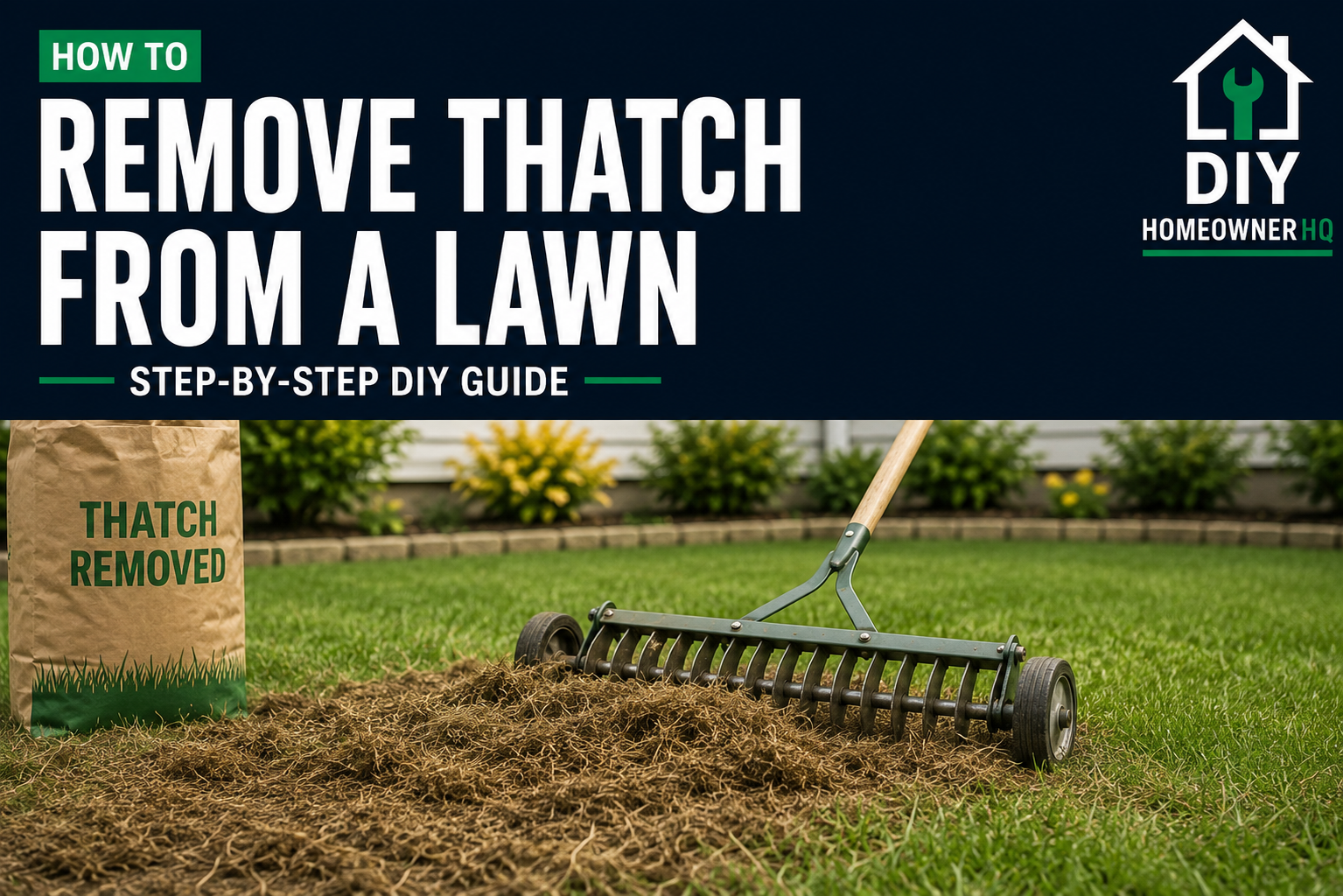
For smaller areas, pull a dethatching rake firmly through the grass so the tines reach into the thatch layer and pull loose material toward the surface.
For larger lawns, a power dethatcher can make the job significantly faster. Set the machine according to its instructions and make straight passes across the lawn.
Start conservatively rather than digging aggressively into the soil.
What You Should See: Brown, fibrous material being pulled from beneath the green grass and collecting on the surface.
If Yours Looks Different: If you’re tearing out large amounts of healthy grass or digging deeply into the soil, reduce the aggressiveness of the rake or machine.
Step 3: Make a Second Pass if Needed
If the lawn has heavy thatch, make another pass at a different angle to the first.
You don’t need to remove every piece of organic material. The goal is to reduce excessive buildup without unnecessarily damaging healthy turf.
💡 Pro Tip: Two lighter passes are generally better than one extremely aggressive pass that tears up the lawn.
Step 4: Rake Up the Thatch
Use a leaf rake to collect the loosened material from the lawn.
You’ll often remove considerably more material than expected, especially from a lawn that hasn’t been dethatched in several years.
Bag the debris or compost it when appropriate.
What You Should See: More soil visible between the grass plants with much of the dense brown layer removed.
Step 5: Help the Lawn Recover
The lawn may look rough immediately after dethatching. That’s normal.
If the grass is thin, dethatching can be a good opportunity to overseed the lawn because more seed can reach the soil.
Water appropriately after the project and minimize heavy foot traffic while the lawn recovers.
If fertilizing, use an appropriate product and follow the application rate on the label.
If Yours Looks Different: If large areas are completely bare after dethatching, the turf may have been extremely thin underneath. Those areas may need to be reseeded rather than waiting for them to fill in naturally.
❌ Common Mistakes
Dethatching When It Isn’t Necessary
A small amount of thatch is normal and beneficial.
Removing it unnecessarily can stress an otherwise healthy lawn.
Setting a Power Dethatcher Too Deep
Problem: Large amounts of healthy grass are being ripped from the ground.
Solution: Raise the dethatcher and make shallower passes through the lawn.
Dethatching at the Wrong Time
The lawn needs active growth and favorable conditions to recover.
Avoid aggressive dethatching when the grass is dormant or already severely stressed.
Working With Soggy Soil
Dethatching saturated ground can tear up healthy turf and disturb the soil unnecessarily.
Wait until the soil is slightly moist rather than soaked.
Leaving the Removed Thatch Behind
The material pulled to the surface can create another thick layer if it’s simply left there.
Rake and remove the loosened debris after dethatching.
❓ FAQs
What is lawn thatch?
Thatch is a layer of living and dead stems, roots, and other organic material that develops between the green grass and the soil surface.
How much thatch is too much?
A thin layer is normal. Dethatching is commonly considered when the layer reaches roughly 1/2 inch or more and begins interfering with normal lawn health.
What is the best time to dethatch a lawn?
Dethatch while your grass is actively growing and has enough time to recover. The ideal season depends on whether you have cool-season or warm-season grass.
Should you mow before dethatching?
Yes. Mowing somewhat shorter than normal can make it easier for the dethatching equipment to reach the thatch layer, but avoid scalping the lawn.
Should you aerate or dethatch first?
If the lawn needs both, dethatching first generally makes sense because it removes excess surface material before you aerate the lawn and open the soil below.
Should you seed after dethatching?
You can. Dethatching exposes more soil, which can create good conditions for overseeding if the lawn is thin and it’s the appropriate season for your grass type.
👷 When to Call a Professional
Consider hiring a lawn-care professional if you have a very large lawn, extremely heavy thatch buildup, or aren’t comfortable operating a power dethatcher.
If excessive thatch repeatedly develops, a professional can also help identify contributing problems such as improper fertilization, watering practices, compacted soil, or lawn-management issues.