
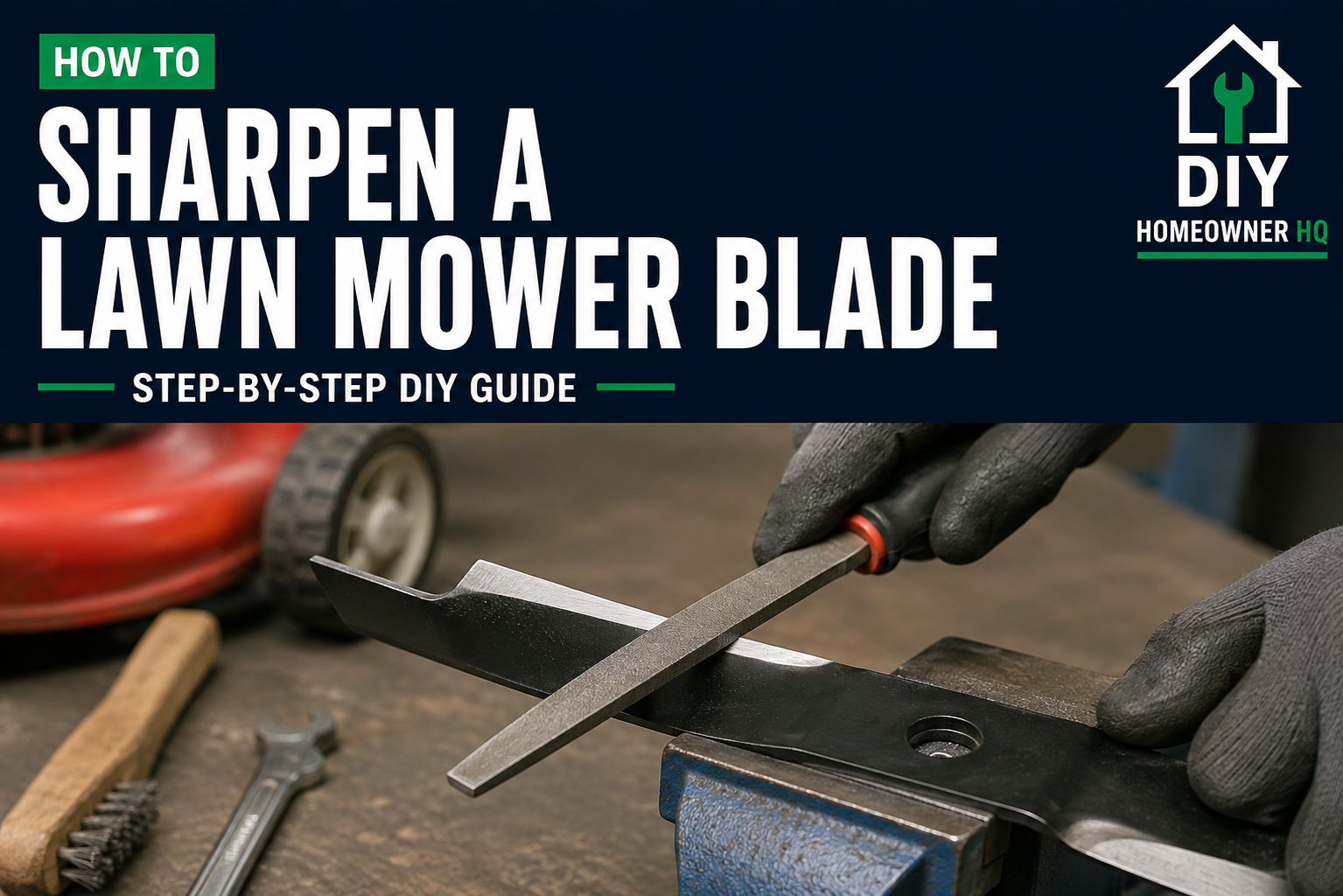
Safety First
Wear heavy work gloves and eye protection when removing and sharpening a mower blade. Disconnect the spark plug wire on a gas mower or remove the battery from an electric mower before working underneath it. Never rely on the mower being switched off alone, and handle the blade carefully—its edge can still cut you even when dull.
Time
30-45 Minutes
Difficulty
Easy-Moderate
Cost
$5-$20
🧰 Tools & Materials
Tools
- Socket wrench or breaker bar
- Correct-size socket
- Torque wrench
- Bench vise or sturdy clamp
- Metal file or mower blade sharpener
- Wire brush
- Heavy work gloves
- Eye protection
- Blade balancer or nail mounted securely in a wall
Materials
- Replacement blade, if the existing blade is damaged
- Penetrating oil (optional)
👀 Signs It’s Time
- Grass tips look torn or shredded after mowing
- Freshly cut grass develops brown or whitish tips
- The mower leaves an uneven-looking cut
- The blade edge has visible nicks or rounded areas
- It has been roughly 20–25 hours of mowing since the blade was last sharpened
📋 Before You Start
Move the mower onto a flat, stable surface and make sure the engine and blade have completely stopped.
For a gas mower, disconnect the spark plug wire so the engine can’t accidentally start. For a battery-powered mower, remove the battery completely.
Before removing the blade, take a photo or mark which side faces the mower deck. Installing the blade upside down is an easy mistake to make.
Check your mower owner’s manual for the correct blade-removal procedure and blade-bolt torque specification.
💡 Pro Tip: If you’re tipping a gas mower onto its side, check the owner’s manual first. Many manufacturers specify which direction the mower should be tilted to prevent fuel or oil from leaking into the wrong areas.
Step 1: Remove the Mower Blade
With the mower safely disabled, tip or position it according to the manufacturer’s instructions.
Hold the blade securely with a block of wood or other recommended method and loosen the center blade bolt with the appropriate socket.
Remove the bolt, hardware, and blade while paying attention to how everything is positioned.
What You Should See: The blade should come free without damage to the mounting hardware, and you should know which side faces the mower deck.
If Yours Looks Different: If the bolt won’t loosen, apply penetrating oil and give it time to work. Avoid using excessive force that could damage the bolt or mower.
Step 2: Clean and Inspect the Blade
Use a wire brush to remove packed grass, dirt, and surface buildup from the blade.
Inspect it carefully for cracks, severe bends, deep gouges, or excessive wear.
Minor nicks and a dull cutting edge can usually be sharpened. A cracked, badly bent, or heavily damaged blade should be replaced rather than repaired.
💡 Pro Tip: Sharpening can’t safely fix structural damage. When in doubt about the condition of the blade, replacement is usually inexpensive compared with the damage a failed blade could cause.
Step 3: Sharpen the Cutting Edges
Secure the blade firmly in a bench vise or clamp.
Using a metal file or mower blade sharpening tool, follow the existing angle of the cutting edge rather than creating a new angle.
Work from the center of the blade toward the outer end using smooth, consistent strokes. Remove only enough material to restore a clean cutting edge.
Repeat on the opposite cutting edge.
What You Should See: A smooth, consistent cutting edge without large nicks or rounded sections. It does not need to be razor sharp.
If Yours Looks Different: If removing the damaged areas would require taking off a significant amount of metal, replace the blade instead.
Step 4: Check the Blade Balance
Place the blade on a blade balancer or suspend it from its center hole on a securely mounted nail.
Allow the blade to settle.
If one side drops noticeably lower than the other, that side is heavier. Remove a small amount of additional material from the cutting edge on the heavier side and check again.
Repeat until the blade remains reasonably level.
What You Should See: The blade should sit close to level instead of consistently dropping toward one side.
Step 5: Reinstall the Blade
Position the blade exactly as it was originally installed, making sure the correct side faces the mower deck.
Reinstall the washers, hardware, and blade bolt in their original positions.
Tighten the blade bolt to the torque specification listed in your mower owner’s manual.
Return the mower to its normal position before reconnecting the spark plug wire or reinstalling the battery.
What You Should See: The blade should sit firmly against its mounting surface with no looseness or unusual movement.
❌ Common Mistakes
Sharpening the Blade Too Much
A mower blade doesn’t need a razor-sharp edge. Removing excessive material can weaken the blade and make it dull faster.
Skipping the Balance Check
Problem: The mower vibrates excessively after the blade is sharpened.
Solution: Shut the mower down and check the blade balance and installation before using it again.
Installing the Blade Upside Down
An upside-down blade won’t cut properly and can leave the lawn looking worse than before.
Take a photo before removal and reinstall the blade in the same orientation.
Ignoring a Damaged Blade
Cracks, severe bends, or significant metal loss aren’t sharpening problems.
Replace a badly damaged blade rather than trying to restore it.
Guessing at the Blade-Bolt Torque
A loose blade is dangerous, while overtightening can damage hardware.
Use the manufacturer’s torque specification and a torque wrench.
❓ FAQs
How often should you sharpen a lawn mower blade?
A common guideline is about every 20–25 hours of mowing, but inspect the blade more frequently if you regularly hit sticks, rocks, or other debris.
How sharp should a lawn mower blade be?
It should have a clean, defined cutting edge but doesn’t need to be razor sharp. An edge roughly similar to a butter knife is generally sufficient.
Can you sharpen a mower blade without removing it?
It may be possible on some mowers, but removing the blade makes it easier to sharpen evenly, inspect for damage, and check the balance afterward.
Can you use an angle grinder to sharpen a mower blade?
Yes, but it removes material much faster than a hand file. Beginners should work carefully to avoid changing the blade angle, overheating the metal, or removing too much material.
How do you know if a mower blade is unbalanced?
Place it on a blade balancer. If one end consistently drops lower than the other, that side is heavier and needs a small amount of additional material removed.
When should you replace a mower blade instead of sharpening it?
Replace the blade if it’s cracked, badly bent, deeply damaged, excessively worn, or has already lost significant material from repeated sharpening.
👷 When to Call a Professional
Take the mower to a repair shop if the blade bolt is seized, the blade mounting hardware is damaged, or you’re unable to safely remove or reinstall the blade.
Professional service is also a good choice if the mower continues vibrating after the blade has been properly sharpened, balanced, and installed, since another mower component may be damaged.