
Safety First
Keep the door securely open while working so it can’t swing shut on your fingers. Be careful with screwdrivers and drills around the door edge, and don’t overtighten the mounting screws.
Time
20-45 Minutes
Difficulty
Easy
Cost
$20-$60
🧰 Tools & Materials
Tools
- Phillips screwdriver
- Tape measure
- Drill, optional
Materials
- Replacement deadbolt
🔍 Signs It’s Time to Replace Your Deadbolt
- The key sticks or is difficult to turn.
- The deadbolt feels loose or worn.
- The bolt no longer extends smoothly.
- You want to change the lock after moving into a home.
- You’re upgrading the style or security of the lock. If you want keyless entry or app-based access, you may also want to install a smart door lock instead of another standard deadbolt.
🛒 Before You Buy
Check the backset of your existing deadbolt—the distance from the edge of the door to the center of the bore hole. Most residential doors use a 2⅜-inch or 2¾-inch backset.
Also check your door thickness and choose a deadbolt designed to fit it.
🔧 Before You Start
Open the door and keep it open throughout the replacement. Test the new deadbolt parts before installation and review the manufacturer’s instructions since designs can vary slightly.
Step 1: Remove the Old Deadbolt
From the interior side of the door, remove the two mounting screws holding the deadbolt together.
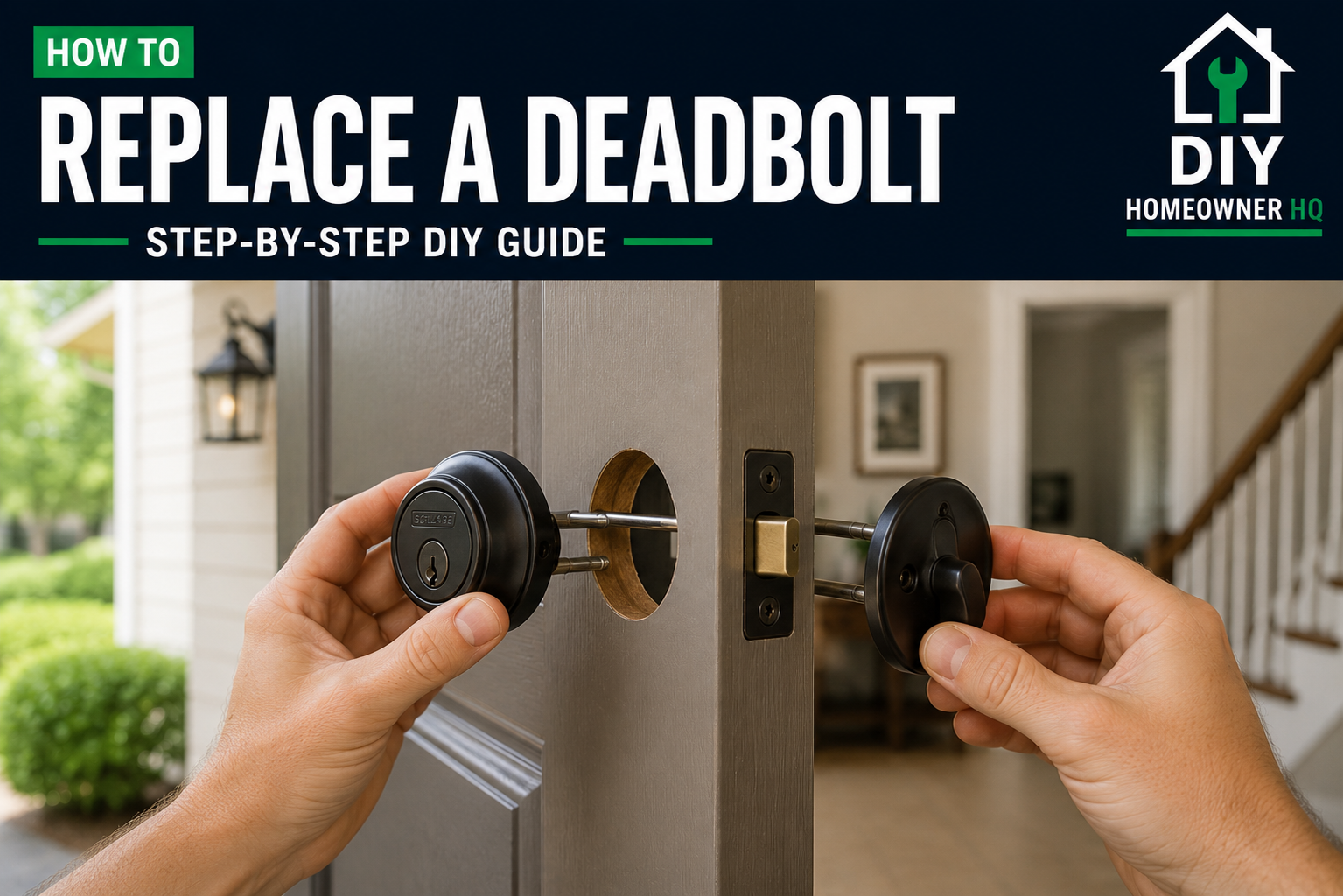
Pull the interior thumb-turn and exterior keyed cylinder away from opposite sides of the door.
Then remove the screws from the latch faceplate on the door edge and slide the latch assembly out.
Step 2: Install the New Deadbolt Latch
Slide the new latch into the hole in the edge of the door with the word “UP,” if marked, facing upward.
Make sure the backset matches the existing bore hole, then secure the faceplate with its screws.
What You Should See: The latch faceplate should sit flat against the edge of the door and the bolt should move freely.
Step 3: Install the Exterior and Interior Assemblies
Insert the exterior keyed cylinder through the bore hole and through the deadbolt latch.
Position the interior thumb-turn on the opposite side, making sure everything lines up correctly.
Install the mounting screws from the interior side and tighten them evenly.
💡 Pro Tip: Start both mounting screws by hand before tightening either one completely. This makes it easier to keep both sides of the deadbolt aligned.
If Yours Looks Different: Some deadbolts use a separate interior mounting plate. Follow the instructions included with your lock for the correct assembly order.
Step 4: Test the Deadbolt
With the door still open, turn the thumb-turn and use the key several times.
The bolt should extend and retract smoothly without binding.
Close the door and test it again. Make sure the bolt enters the strike plate cleanly without needing to push, pull, or lift the door. If the deadbolt works smoothly with the door open but doesn’t line up when the door is closed, door or strike plate alignment may be the real problem.
⚠️ Common Problems
Problem: The deadbolt is difficult to turn.
Loosen the mounting screws slightly and check that both halves of the lock are properly aligned.
Problem: The bolt doesn’t line up with the strike plate.
The door may be sagging or the strike plate may need adjustment. If the gaps around the door are uneven or the latch side has noticeably dropped, see How to Fix a Sagging Door before modifying the strike plate.
Problem: The new latch doesn’t reach the bore hole correctly.
Check the latch backset. Many replacement deadbolts can be adjusted between 2⅜ and 2¾ inches.
❓ FAQs
Can I replace a deadbolt without changing the door?
Yes. If the new deadbolt matches the existing bore size and backset, replacement is usually straightforward.
Do I need a drill to replace a deadbolt?
Usually not if you’re replacing an existing deadbolt with a compatible model.
Should I test the deadbolt with the door open first?
Yes. Always confirm that the bolt operates correctly before closing and locking the door.
📞 When to Call a Professional
If the existing bore holes are the wrong size, the door is badly misaligned, or the deadbolt still binds after proper installation, a locksmith or door professional can correct the issue.