
Safety First
Wear gloves, closed-toe shoes, and eye protection when applying crabgrass killer. Always follow the product label for application rates, lawn compatibility, and reentry time. Keep children and pets off treated areas until the product label says it’s safe, and avoid spraying on windy days or near desirable plants.
Time
30-60 Minutes
Difficulty
Easy
Cost
$15-$40
🧰 Tools & Materials
Tools
- Garden gloves
- Hand weeder or small digging tool
- Pump sprayer or ready-to-use applicator, if needed
- Lawn mower
Materials
- Crabgrass killer labeled safe for your grass type
- Pre-emergent crabgrass preventer for future control
- Grass seed, if bare spots need to be repaired afterward
👀 Signs You Have Crabgrass
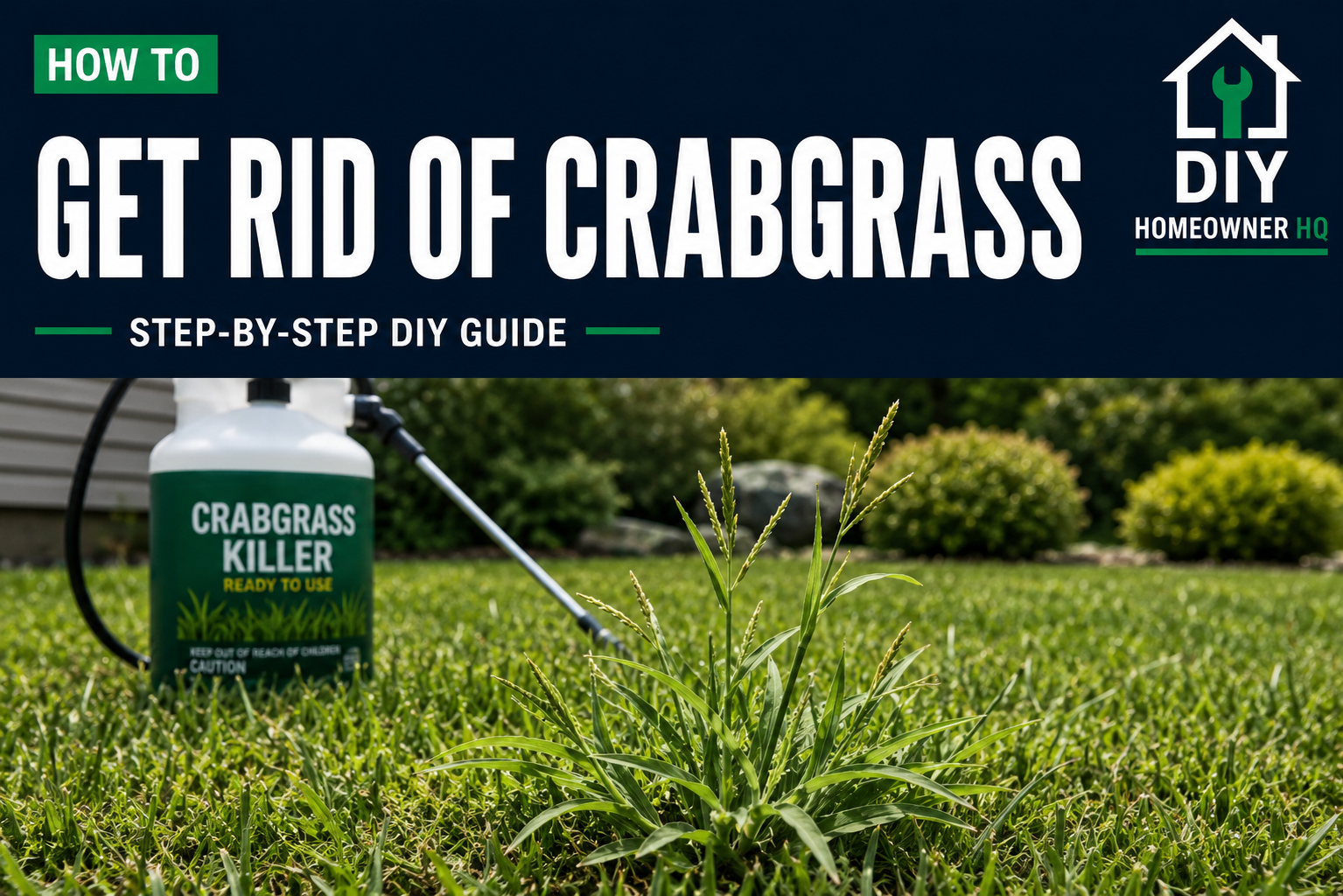
- Coarse, light-green grass growing faster than the surrounding lawn
- Low, spreading clumps with stems radiating outward from the center
- Crabgrass appearing in thin or bare areas of the lawn
- New patches developing during warm summer weather
Crabgrass is an annual weed, meaning existing plants die after frost but can leave behind thousands of seeds for the following year.
📋 Before You Buy
Check your lawn’s grass type before choosing a crabgrass killer. Not every herbicide is safe for every type of turf.
Look for a selective post-emergent herbicide specifically labeled for crabgrass and confirm that your lawn type appears on the product label.
If you’re buying a pre-emergent for next season, remember that it prevents crabgrass seeds from successfully establishing—it won’t kill mature crabgrass that’s already growing.
💡 Pro Tip: Always read the herbicide label before buying. The label will tell you exactly which weeds it controls and which lawn types can safely be treated.
📋 Before You Start
Identify the weed before treating it. Crabgrass can be confused with other grassy weeds, and using the wrong herbicide may not solve the problem.
Avoid mowing immediately before treatment if the product label recommends having plenty of leaf surface available for the herbicide.
Check the weather as well. Follow the label’s requirements for temperature, rain, watering, and mowing before and after application.
Step 1: Remove Small Patches by Hand
If you only have a few crabgrass plants, hand removal may be the easiest solution.
Grab the plant close to the soil and pull out the entire clump, including as much of the root system as possible. A hand weeder can help loosen compacted soil.
Fill any larger holes with soil and grass seed if necessary. If you’re repairing a larger area, follow our How to Plant Grass Seed guide for proper soil preparation, seeding, and watering.
What You Should See: The entire crabgrass clump should come out rather than simply breaking off at the top.
Step 2: Treat Larger Areas With Crabgrass Killer
For widespread crabgrass, use a selective post-emergent herbicide labeled for crabgrass and your specific lawn type.
Apply it exactly according to the product label. Spot-treating individual patches is often preferable when crabgrass isn’t spread throughout the entire lawn.
Avoid spraying nearby flowers, shrubs, or other desirable plants unless the label specifically says the product is safe around them.
What You Should See: Depending on the product, treated crabgrass may begin yellowing, browning, or declining over the following days or weeks.
If Yours Looks Different: Don’t immediately apply another treatment if nothing happens after a day or two. Check the product label for the expected response time and instructions for repeat applications.
Step 3: Recheck and Treat Remaining Crabgrass
Inspect the lawn again after the amount of time specified on the herbicide label.
Some established crabgrass may require another treatment. Follow the label carefully regarding how soon another application can be made.
Pull dead plants once they’re easy to remove, especially if they’ve left noticeable clumps or bare areas.
Step 4: Repair Thin and Bare Areas
Crabgrass thrives where desirable grass is thin and soil is exposed.
Once the crabgrass is under control and the herbicide’s required reseeding interval has passed, repair bare areas with grass seed appropriate for your lawn.
Keep newly seeded areas consistently moist while the grass establishes.
💡 Pro Tip: A thick lawn is one of your best defenses against future crabgrass because it leaves less open soil for crabgrass seedlings to establish.
Step 5: Prevent Crabgrass Next Season
Apply a crabgrass pre-emergent before seeds begin germinating in spring.
Timing matters more than the calendar date because soil temperatures and weather conditions vary from year to year.
Follow the product label carefully for application timing and watering instructions.
Keep in mind that many pre-emergent herbicides can also prevent desirable grass seed from germinating, so coordinate crabgrass prevention with any spring seeding plans.
💡 Pro Tip: A thick lawn is one of your best defenses against future crabgrass because it leaves less open soil for crabgrass seedlings to establish. If your entire lawn is starting to thin, overseeding your lawn can help increase turf density.
❌ Common Mistakes
Treating the Wrong Weed
Problem: The weed doesn’t respond even though the herbicide was applied correctly.
Solution: Confirm that you’re actually dealing with crabgrass and that the product specifically lists it on the label.
Using the Wrong Herbicide
Some crabgrass killers can damage certain lawn grasses.
Always verify that your grass type is listed as safe on the product label before applying it.
Applying Too Much Product
More herbicide doesn’t mean faster results. Applying more than the labeled rate can damage the surrounding lawn.
Measure and apply products exactly as directed.
Ignoring Bare Spots
Killing crabgrass without fixing thin areas leaves open soil where weeds can return.
Reseed or repair those areas when product restrictions and the season allow.
Skipping Pre-Emergent
Killing this year’s crabgrass only addresses plants that have already grown. Preventing new seedlings from establishing the following spring can dramatically reduce the problem.
❓ FAQs
Does crabgrass come back every year?
Individual crabgrass plants are annuals and die after frost, but their seeds can remain in the soil and produce new plants the following year.
Can you pull crabgrass by hand?
Yes. Hand pulling works especially well when there are only a few plants. Try to remove the entire clump before it produces seed.
Will mowing kill crabgrass?
No. Mowing can keep crabgrass shorter, but it generally won’t eliminate established plants.
When is the best time to kill crabgrass?
Post-emergent crabgrass killers generally work best while plants are young and actively growing. Always follow the temperature and timing requirements listed on the specific product.
When should you apply crabgrass preventer?
Pre-emergent should be applied before crabgrass germinates in spring. Local soil temperatures and product instructions are better guides than using the same calendar date every year.
Can you seed after using crabgrass killer?
It depends on the herbicide. Some products require you to wait before reseeding, so check the product label for the required interval.
👷 When to Call a Professional
Consider a lawn-care professional if crabgrass has taken over a large portion of the lawn, you’re unsure what type of grass or weed you have, or repeated treatments haven’t worked.
Large recurring infestations can also indicate underlying problems such as thin turf, compacted soil, improper mowing, or poor lawn-care practices that need to be corrected.